

You're probably in one of two places right now.
Either you've fallen in love with the idea of baking your own sourdough, then hit a wall the moment you realised the bread depends on a living starter and not just a pretty loaf tin. Or you're trying to buy a thoughtful present and have discovered that many UK sourdough kits look charming online, yet it's hard to tell which one will help someone bake bread instead of storing an unused jar at the back of a cupboard.
That's the fork in the road with a Sourdough Kit UK search. People think they're choosing tools. They're choosing how much help they'll get keeping a starter alive, active, and predictable in an ordinary British kitchen.
A beginner rarely fails because they didn't own enough accessories. They usually struggle because the starter went sluggish on a cold worktop, they weren't sure when to feed it, or the kit arrived with too much clutter and not enough guidance. That's why the smallest kit often turns out to be the smartest one. A dependable culture, a jar you can read at a glance, and instructions that make sense on a rainy Tuesday matter more than a box stuffed with gadgets.
Table of Contents
- Introduction to Sourdough Kits in the UK
- What a Sourdough Kit Actually Is and How It Works
- What UK Sourdough Kits Commonly Include
- How to Choose the Right Sourdough Kit for Your Experience
- Keeping Your Starter Active in a UK Kitchen
- Gifting a Sourdough Kit and What Makes It Work
- Your Next Loaf Starts Here
Introduction to Sourdough Kits in the UK
You buy a sourdough kit with good intentions. By day three, the jar is quiet, the kitchen is cold, and you are left wondering whether you bought the wrong kit or missed something obvious.
That moment is common in UK kitchens because sourdough usually goes wrong before the dough stage. The sticking point is the starter. If the starter arrives weak, or the instructions are vague about feeding and warmth, an impressive bundle of tools will not rescue the first loaf.
Where beginners actually struggle
Beginners often assume they need more equipment, when the failure point is usually fermentation. A live, mature starter gives you a better starting line. Clear feeding guidance gives you a rhythm to follow. A marked jar helps you read growth properly, a bit like checking a fuel gauge instead of guessing from the sound of the engine.
Practical rule: Choose a kit that helps you judge feeding, temperature, and timing. Extra accessories can wait.
This matters in the UK because our kitchens rarely behave the same way all year. A starter that perks up in a warm flat can slow right down in a draughty terrace kitchen. Good instructions account for that. They tell you what to look for on a chilly Tuesday in February, not only in ideal baking conditions.
Small kits often do this better.
A large box can look generous, especially if you are buying a gift, but sourdough success usually rests on two things. Is the starter reliable after delivery? Can the person using it understand what to do next without hunting through five videos and three blog posts? If the answer to both is yes, the smaller kit may be the stronger choice.
Why this topic matters now
Sourdough has moved well beyond a niche baking hobby. Puratos says sourdough is the most talked-about bakery trend in its sourdough trends and ideas for bakers report. Yet many kit listings still sell the box, not the process.
That mismatch appears in a few very practical questions:
- Will the starter still be active after delivery? A kit should answer that clearly.
- How often will I need to feed it? Beginners need a routine they can keep.
- What if my kitchen is cold? UK temperature swings catch people out fast.
- Is this a good gift? The best gift kits feel welcoming, not burdensome.
A UK shop such as The Sourdough Cult is built around that tension, supplying a live Cheshire culture with practical guidance, but the wider lesson applies to any kit you are considering. Judge the starter support and the teaching first. Then judge the extras.
What a Sourdough Kit Actually Is and How It Works
A sourdough kit is not a bread machine in disguise. It's better to think of it as a starter support system.
At the centre is the starter itself. That starter is a living culture of flour and water, and your job is to keep it fed, warm enough, and on a rhythm it can handle. If that sounds a bit like caring for a tiny kitchen pet, that's because it is. Ignore it too long and it weakens. Feed it sensibly and it becomes reliable.
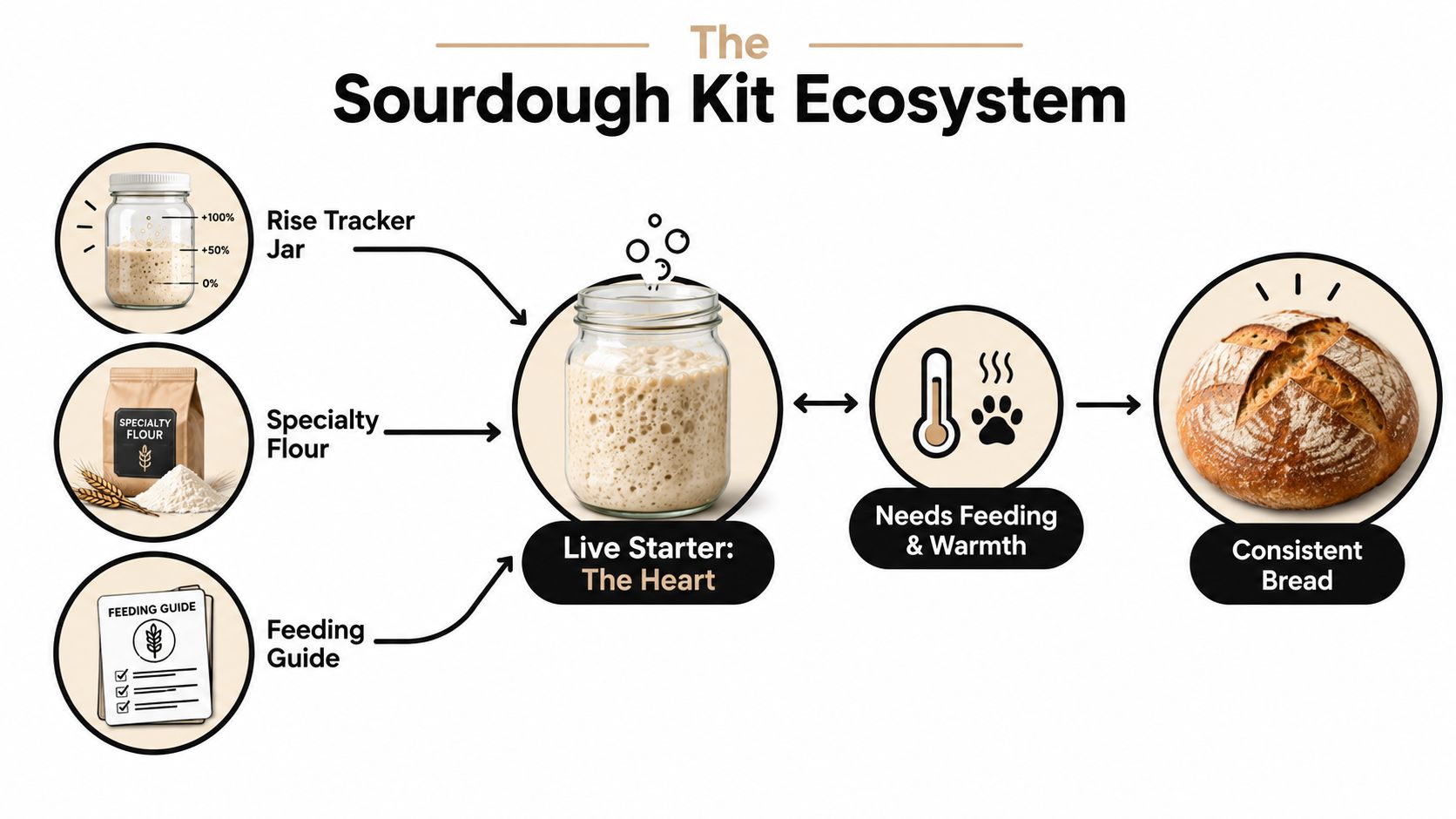
The starter is the engine
Bread rises because the starter is active enough to ferment dough. So when you buy a sourdough kit, you're not mainly buying objects. You're buying a faster route to a working culture and, ideally, instructions that help you keep it that way.
The simplest way to picture it is this:
- You feed the starter with flour and water.
- The starter wakes up and begins producing gas and acidity.
- You watch for growth in the jar to judge its strength.
- You use it at the right point so your dough rises well.
If any of those steps feel vague, a good kit should reduce that vagueness.
Why temperature confuses beginners
Temperature acts like the starter's speed control. UK-facing baking guidance commonly places healthy starter activity in the 20 to 26°C band, with one expert source noting 20 to 24°C as ideal, another recommending 22 to 24°C, and faster, more aggressive fermentation observed around 26 to 30°C. Below about 18°C development slows significantly, while above 30°C the balance can shift toward less desirable microbial activity, as reflected in Paul Hollywood's sourdough starter guidance.
That sounds technical, but the kitchen version is simple. A starter on a cool windowsill will behave differently from one near a warm boiler cupboard. Same jar. Same flour. Different timing.
A starter doesn't read recipes. It reads temperature.
That's why a kit should explain the difference between countertop feeding and cooler storage. Otherwise a beginner may feed on yesterday's schedule, not today's conditions.
What the kit is really for
A well-designed sourdough kit usually helps with three jobs:
- Getting started quickly with a live culture rather than building one from scratch
- Making activity visible through a jar or rise marker
- Reducing uncertainty with short, practical care instructions
The best kits don't try to impress you with quantity. They try to make fermentation easier to read.
What UK Sourdough Kits Commonly Include
Once you know that the starter is the engine, the contents of a UK kit start to make more sense. Every useful item should earn its place by helping you feed, track, or understand that culture.
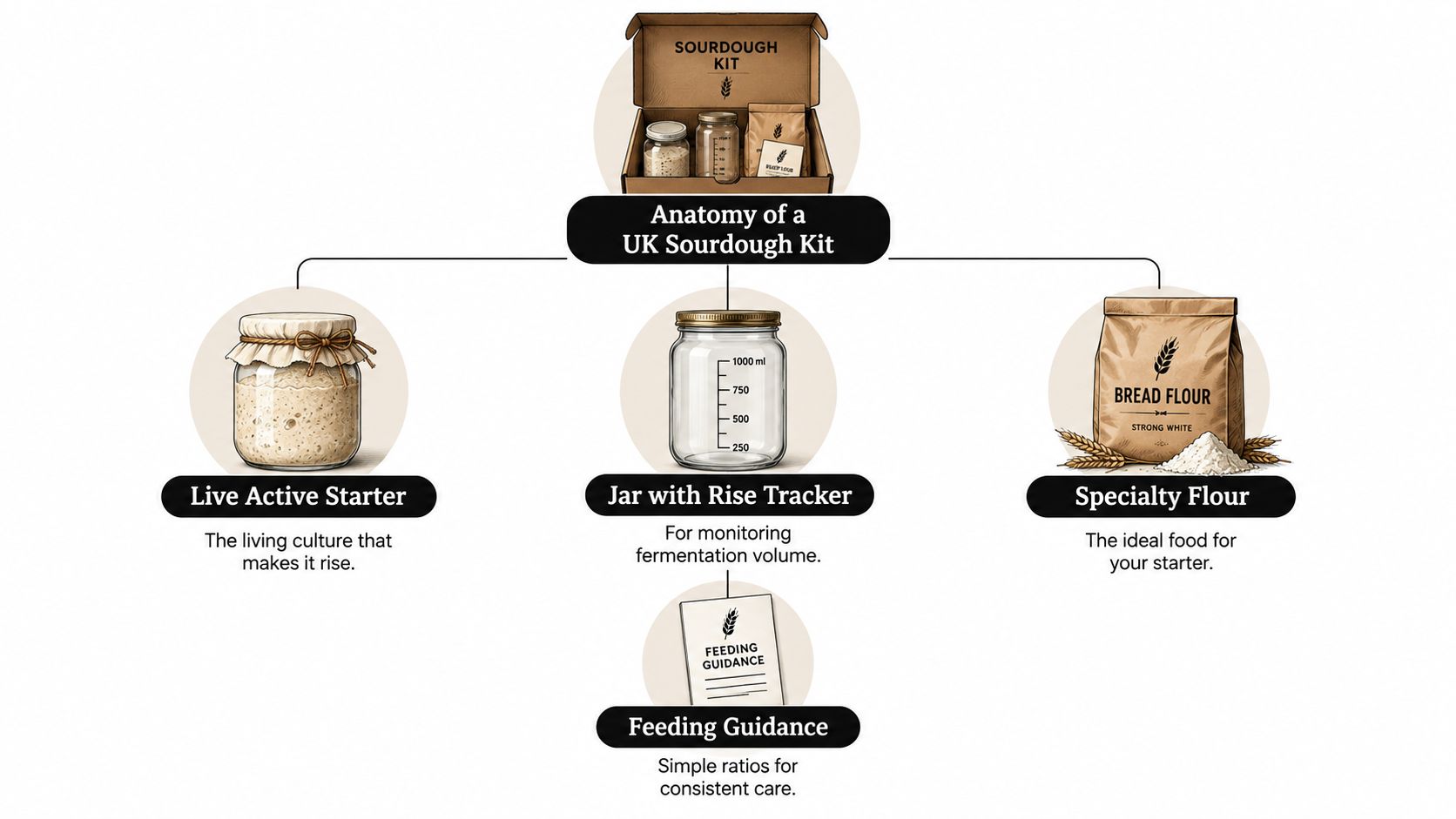
The essentials that actually matter
Most solid UK sourdough kits revolve around four core pieces.
-
Live active starter
This is the part that changes everything for a beginner. A mature culture removes the hardest early stage, which is coaxing a starter into life from scratch and hoping it settles into a stable rhythm. -
A jar with a rise tracker
Fermentation is easier when you can see it. A marked jar helps you notice when the starter has risen well, peaked, and begun to fall. That's far more useful than trying to judge readiness from a few surface bubbles. -
Flour for feeding
Some kits include a small bag of suitable flour to smooth the first few feeds. That helps because the handover from delivered starter to home routine is where many beginners wobble. If you want a fuller sense of flour choices, this guide to the best flour for sourdough starter in the UK gives a practical overview. -
Feeding guidance
This is often the least glamorous part of the box and the most important. Short instructions that tell you what to do on the counter, what to do in cooler storage, and what signs to watch for will be used again and again.
The extras that may or may not help
Some kits add tools such as scrapers, cloth covers, proofing baskets, or decorative items. Those can be useful, but only if they match how the recipient will bake.
A first-time baker doesn't need every sourdough accessory on day one. They need enough to establish a routine without clutter. The more pieces a kit contains, the more likely it is that some will sit untouched while the owner still wonders whether the starter is healthy.
Useful test: Ask of each item, “Will this help me feed the starter, judge its activity, or bake in the next few weeks?”
If the answer is no, it may be a nice extra rather than a reason to choose that kit.
What to look for in the listing
When you read a product page, scan for these signs of a thoughtful UK kit:
-
Starter-first design
The listing should make it clear whether the starter arrives alive and ready to feed, not just dried or symbolic. -
Plain care instructions
Look for guidance that sounds practical rather than theatrical. You want steps, not romance. -
Protective packaging
Postal travel matters with live cultures. The packaging should be arranged for transport, not just shelf appeal. -
Gift presentation if relevant
If it's a present, the kit should feel ready to hand over without needing extra explanation from you.
One example of this starter-first approach is a kit range from The Sourdough Cult, which centres its offers on a live, active family culture from Cheshire plus practical guidance rather than stuffing the box with novelty extras.
How to Choose the Right Sourdough Kit for Your Experience
Choosing a sourdough kit gets much easier when you stop asking, “Which one has more in it?” and start asking, “Which one fits the kitchen I already have?”
A complete beginner and a capable home baker often need very different things. One needs reassurance and structure. The other may only need a dependable starter because they already own jars, scales, and the usual baking bits.
Match the kit to your actual kitchen
Here's a simple comparison of common kit types using the product tiers named in the publisher background.
| Which UK Sourdough Kit Fits Your Baking Level | Best For | Core Includes | When to Choose It |
|---|---|---|---|
| The Initiation | First-time bakers | Live starter, core essentials, starter care guidance | Choose this when you want a clear path to your first loaf without overbuying |
| The 1% | People building a fuller home setup | Starter plus a wider tool set | Choose this when you know you'll use the added equipment regularly |
| The Fresh Start(er) | Bakers who already own kit | Starter-focused setup | Choose this when your tools are sorted and your missing piece is the culture |
The pattern is straightforward. If your cupboard is already organised, don't pay for duplicate tools. If you're new and feel unsure, the right beginner kit can remove a lot of friction. But even then, more gear isn't automatically more helpful.
Questions worth asking before you buy
A good decision usually comes from a few honest answers.
Do you already own the boring but useful basics
If you've got a digital scale, a clean jar, a mixing bowl, and some kitchen confidence, you may not need a large bundle. A starter-only or essentials-led option can be enough.
If you don't have those basics, an entry kit can save separate shopping and reduce the chance that you improvise badly with unsuitable containers or vague measurements.
Are you nervous about the starter itself
This is the biggest dividing line.
Some people aren't worried about baking bread. They're worried about keeping the starter alive. In that case, choose the kit with the clearest feeding and storage instructions, even if it looks smaller than the others. That support will matter longer than an extra accessory.
Will you really use all the extras
It's easy to confuse aspiration with need. A proofing basket, dough scraper, and special cloth can all be enjoyable. They're just not the reason your first loaf succeeds.
A reliable culture plus easy instructions often beats a premium-looking box that leaves you wondering what to do the next morning.
Why the smallest kit often wins
Small kits have a hidden advantage. They reduce decision fatigue.
Instead of unpacking ten items and trying to learn all of them at once, you focus on the two things that matter first: starter care and timing. That makes the whole process feel less like a technical hobby and more like a repeatable kitchen habit.
For many UK homes, that's the difference between “I tried sourdough once” and “I bake this regularly now.”
A simple way to choose
If you're still torn, use this short filter:
- Choose an essentials kit if you're new, want guidance, and don't want clutter.
- Choose a fuller setup if you know you'll use the added tools and want everything in one go.
- Choose starter-only if you already bake and need a dependable culture.
Buy for the stage you're actually in, not the baker you might become six months from now.
That one shift saves a lot of wasted money and a lot of abandoned enthusiasm.
Keeping Your Starter Active in a UK Kitchen
Many beginner hopes either settle into a rhythm or drift off course. The good news is that starter care becomes much simpler once you understand two levers: temperature and feeding ratio.
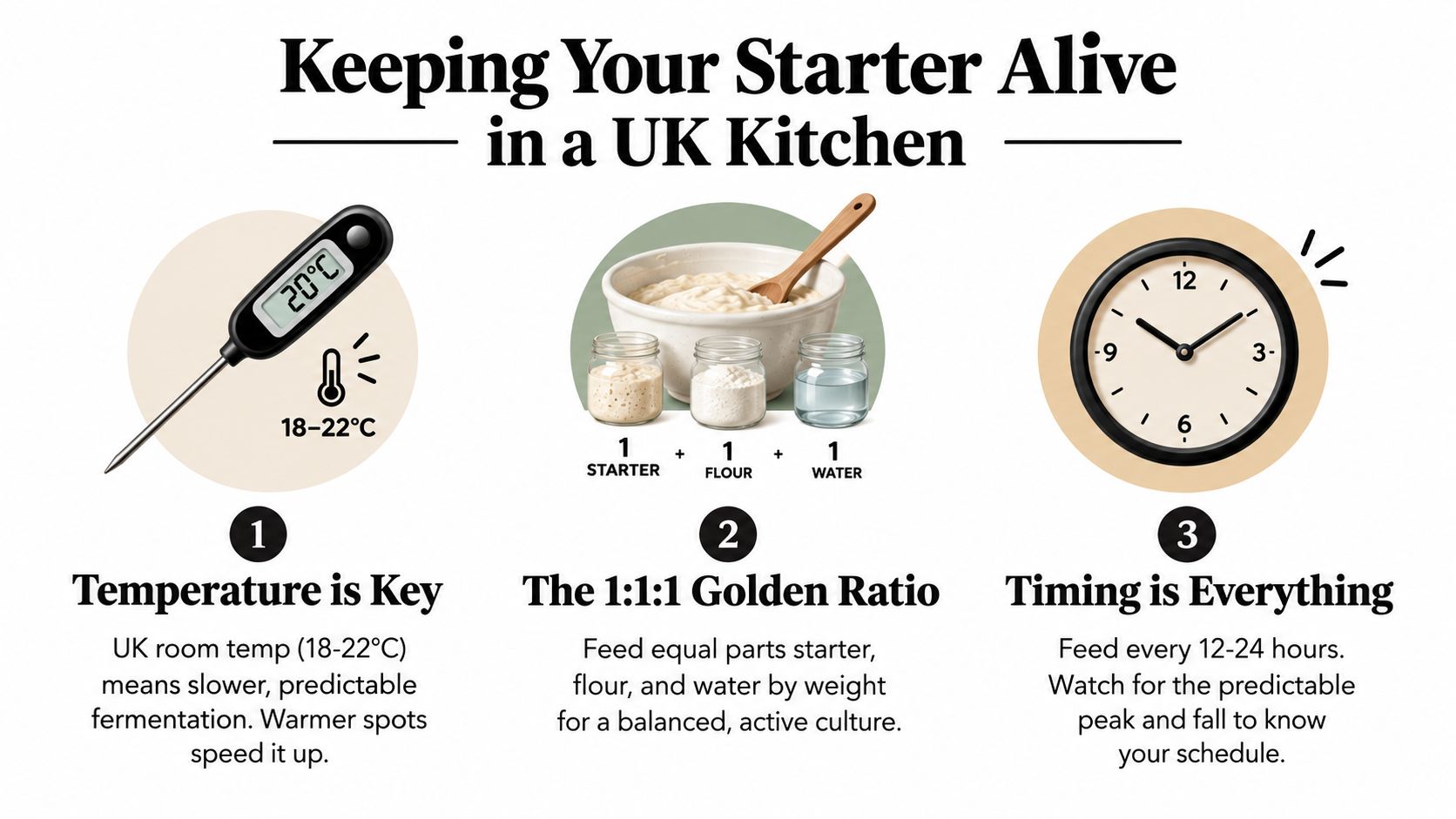
Start with a simple feeding habit
Many practical UK recipes begin with equal weights of flour and water, such as 50g flour and 50ml water, or similar 1:1 mixes, because that gives a predictable paste consistency and helps microbial activity establish cleanly. UK storage guidance also shows how ratio and temperature work together. A 1:4:4 seed ratio can extend feed intervals from about 24 hours at 20°C to 72 hours at 10°C and 120 hours at 7°C, according to Brod & Taylor's sourdough home guidance.
For a home baker, the lesson is simple. If your kitchen is cooler or you want longer gaps between feeds, ratio and storage temperature matter. If your kitchen is warmer, your starter may ripen much faster than you expect.
Countertop and cooler storage are different routines
A lot of confusion comes from treating every day the same.
On the countertop, the starter is active and moving through its cycle more quickly. In cooler storage, that cycle slows down. Neither approach is wrong. They just need different timing.
That's why gram-based instructions are so helpful. They let you repeat what worked and change one variable at a time when the weather shifts.
If you want a plain-language walkthrough, this guide on how to feed a sourdough starter without killing it is the kind of support many kits should include from the start.
Use the jar as your thermometer's partner
You don't need to become obsessed with numbers. You do need to observe patterns.
A rise-tracking jar helps you notice:
- How high the starter rises after feeding
- How long it takes to get there
- When it begins to recede
- Whether your recent changes helped or hurt
Those visual cues matter because sourdough is a living process. A winter kitchen may ask for patience. A sudden warm spell may ask for faster action.
Watch the starter's behaviour, not just the clock.
A calm routine for real life
If you're busy, don't assume sourdough is only for people who organise their week around bread. It usually works better to build a modest, repeatable habit than an ambitious one you won't keep.
Try this mindset:
- Feed by weight so your mixture stays consistent.
- Keep the jar somewhere sensibly stable.
- Notice how long it takes to rise in your own kitchen.
- Adjust storage and feeding rhythm as the weather changes.
That's the point where starter care stops feeling mysterious. You're no longer copying generic advice. You're learning your kitchen.
Gifting a Sourdough Kit and What Makes It Work
You buy a sourdough kit for a friend, they unwrap it with a smile, then pause and ask the question every gift buyer hopes to avoid. “What do I do first?”
That moment matters more than the ribbon. A good sourdough gift should make the first bake feel possible in an ordinary UK kitchen, not turn into a box of nice-looking uncertainty.
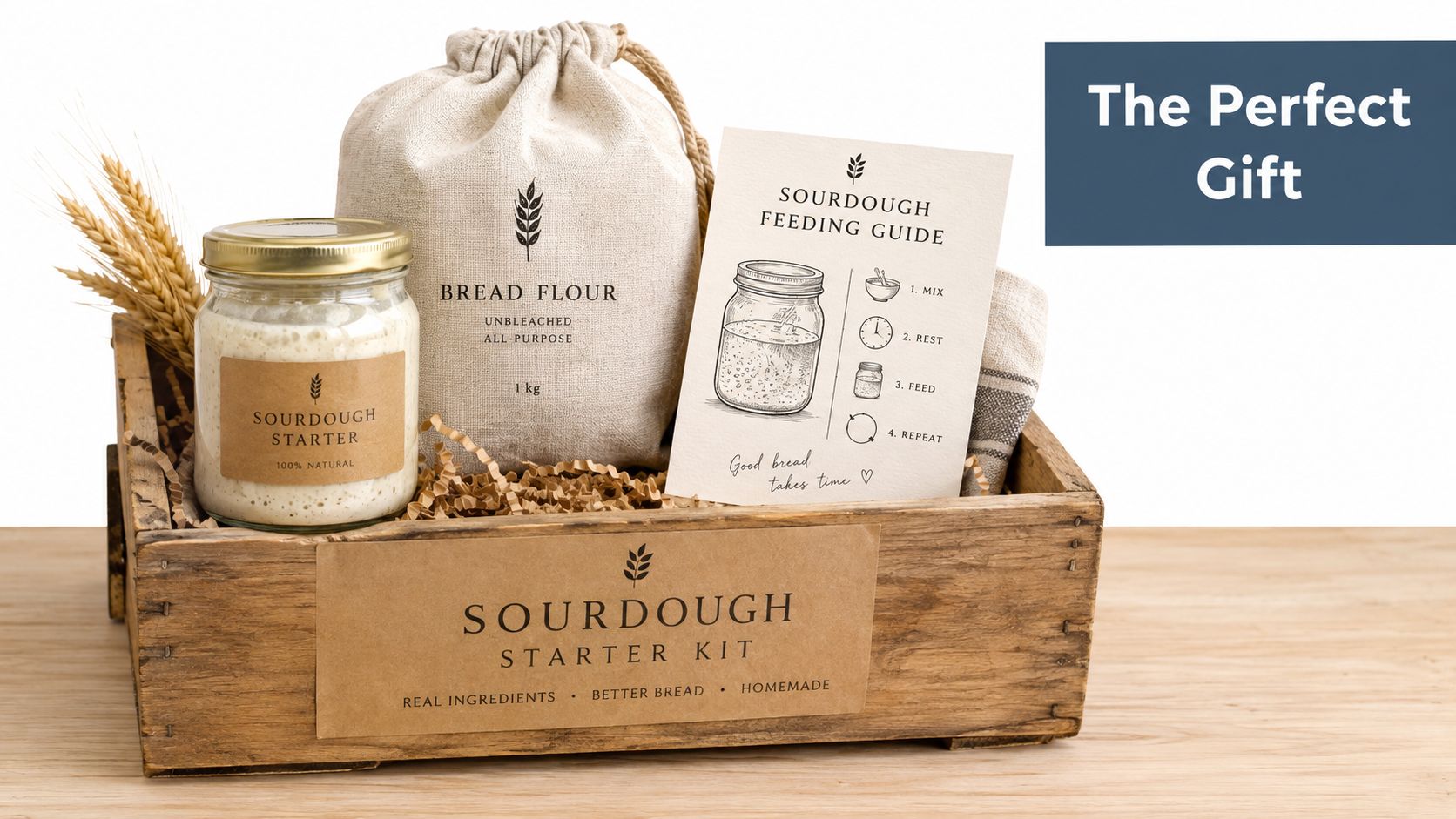
Gift buyers often judge the box before the bake. That is understandable. Presentation helps a present feel special. But sourdough behaves more like a houseplant than a tin of biscuits. If the live starter arrives tired, or the instructions leave gaps, the gift can feel harder than it looks.
The stronger question is simple. Will this kit help the recipient keep a starter alive long enough to enjoy it?
What makes a sourdough gift feel beginner-friendly
The best gift kits usually get four practical things right:
-
A reliable starter is the centre of the kit
The starter is the engine. If that part is weak, extra tools do not rescue the experience. -
The instructions cover the first few decisions clearly
A beginner needs to know how to feed it, where to keep it, and what signs show it is ready. Clear guidance removes guesswork at the point people are most likely to stop. -
The kit feels complete for a normal home kitchen
The recipient should be able to start without a last-minute hunt for key basics. -
The packaging protects the culture in the post
Gift presentation matters, but safe travel matters more for something alive.
Why smaller kits often make better gifts
With sourdough now a familiar idea rather than a novelty, the gift choice is less about impressing someone with a large bundle and more about helping them succeed.
That is where many UK buyers get pulled off course. A bigger box can look more generous, yet beginners usually benefit more from one healthy starter, one useful jar, and instructions that answer common problems in plain English. It works like giving someone a good bicycle with the seat adjusted, rather than a shed full of parts.
Analysts at Finsbury Foods noted 46% year-on-year growth in sourdough bread in their bakery trends for 2026 overview. For gifting, that growth matters because it shifts the question. The challenge is no longer “Will they like the idea of sourdough?” It is “Will they get a calm, usable first experience?”
That is why the smallest sensible kit often wins, especially for gifts, flats, and compact UK kitchens. It asks for less storage, creates less clutter, and keeps attention on the part that decides whether the hobby sticks. The starter and the guidance.
For buyers who want presentation to feel special without losing that practical focus, the engraved sourdough gift collection hobby kit shows how a gift format can still keep starter care at the centre.
A short demonstration can also help you judge whether a kit feels welcoming in real life.
Good occasions for a sourdough gift
A sourdough kit suits people who enjoy useful presents and quiet kitchen rituals. Housewarmings, birthdays, Christmas, Mother's Day, Father's Day, and thank-you gifts can all work well.
One quick test helps. Ask whether the recipient likes learning by repetition. Feed, observe, bake, repeat. If yes, a compact, well-explained kit can be thoughtful in a way a larger bundle often is not.
Your Next Loaf Starts Here
You open the box, clear a bit of counter space, and wonder whether this is going to become a real loaf or another cupboard project. That first hour matters more than the number of extras in the package.
Use this quick check before you buy:
- Is the starter the part the kit is built around?
- Do the instructions explain feeding, timing, and storage in plain language?
- Will you use the tools in a normal UK kitchen?
If the answer is yes to all three, you are starting on solid ground. Sourdough gets easier once the first steps make sense. The process works like learning a small kitchen routine. Feed, notice the changes, bake, then repeat.
If you want a practical route into sourdough, The Sourdough Cult offers live starter, starter-led kits, and straightforward care guidance built for home bakers in the UK. If you're choosing between a starter-only option, a beginner kit, or a giftable set, it's a useful place to compare what you'll use in the kitchen.


