

You're halfway through mixing a sourdough dough when you notice a sticky layer clinging to the bottom of the bowl. Your hands are covered in flour, the dough is too wet for a spoon, and tipping the bowl would leave a frustrating amount behind. You reach for the flexible scraper beside the scales, run its edge around the curve, and lift the dough cleanly in one movement.
That small action is where bowl scraper silicone earns its place. The right tool can reduce waste, protect your bowl, support gentle mixing, and make wet dough far easier to handle. The wrong one can fold uselessly against a firm dough or leave you wondering whether its food-contact claims are trustworthy.
Table of Contents
- The Scraper You Reach for Without Thinking
- What a Silicone Bowl Scraper Actually Is
- Why Home Bakers Choose Silicone Over Other Materials
- Everyday Jobs a Silicone Bowl Scraper Handles
- Choosing the Right Size, Shape, and Rigidity
- UK Food Safety and Certification Explained
- Cleaning, Storing, and Knowing When to Replace
- Putting It All Together for Better Bakes
The Scraper You Reach for Without Thinking
The moment usually arrives between more important steps. You've poured a batter into a tin and a ribbon is still hanging from the mixing bowl. Or you've mixed flour and water for sourdough, and a dry patch has settled in the base. Perhaps your levain is ready, but the last spoonful is stuck to the jar rim.
You don't stop to plan. Your hand finds the scraper.
A good silicone bowl scraper follows the inside of a curved bowl more closely than a spoon can. Its edge gathers butter from the side, lifts flour from the base, and pushes sticky dough towards the centre instead of leaving a thin film behind. During folding, it also gives you control without forcing you to stir aggressively. That matters for delicate batters, where rough mixing can knock out air, and for developing dough, where you want to move the mixture without shredding it.
Practical rule: If a tool solves a problem before you consciously notice the problem, it deserves to live beside your mixing bowl.
The scraper also makes clean-up calmer. You can clear most of a bowl before washing it, remove dough from a fermentation tub without dragging it across the worktop, and collect the final portion of starter before feeding the jar. It isn't glamorous equipment, but it helps protect ingredients, time, and consistency.
That everyday usefulness explains why silicone scrapers have moved beyond a specialist baking drawer. A 2026 UK market estimate places silicone spatula retail value at £80 million to £110 million, with annual unit sales of about 20 million to 25 million, and estimates silicone at roughly 45% to 55% of the UK retail segment by value. The estimate links that position to non-scratch performance and heat resistance up to 260°C in this UK-focused silicone temperature guide.
What a Silicone Bowl Scraper Actually Is
A silicone bowl scraper is a flexible food-contact tool with a broad edge designed to press against the sides and base of a bowl. Some are a single moulded piece. Others have a silicone blade attached to a plastic or silicone handle, with the joint becoming an important part of cleaning and durability.
The blade may be straight, curved, spoon-shaped, or a combination of these profiles. A straight edge is useful for clearing a flat bowl base. A curved edge follows a round vessel. Some spatula-style designs add a firmer side for pushing, portioning, or spreading.
The material changes how the tool behaves:
- Silicone bends around curves instead of scraping with a hard corner.
- Rubber can feel grippy, but it may absorb odours or age differently depending on its formulation.
- Wood stays rigid and feels pleasant in the hand, but it doesn't conform closely to a bowl and needs more careful drying.
- Metal provides force and a clean cut, but it can scratch coated surfaces and isn't suitable for sweeping around delicate non-stick cookware.
Food-grade silicone also handles temperature changes well, which makes it useful for warm butter, chilled dough, and room-temperature batter. It feels soft at the edge, yet a well-designed blade should still have enough body to move food rather than collapsing immediately.
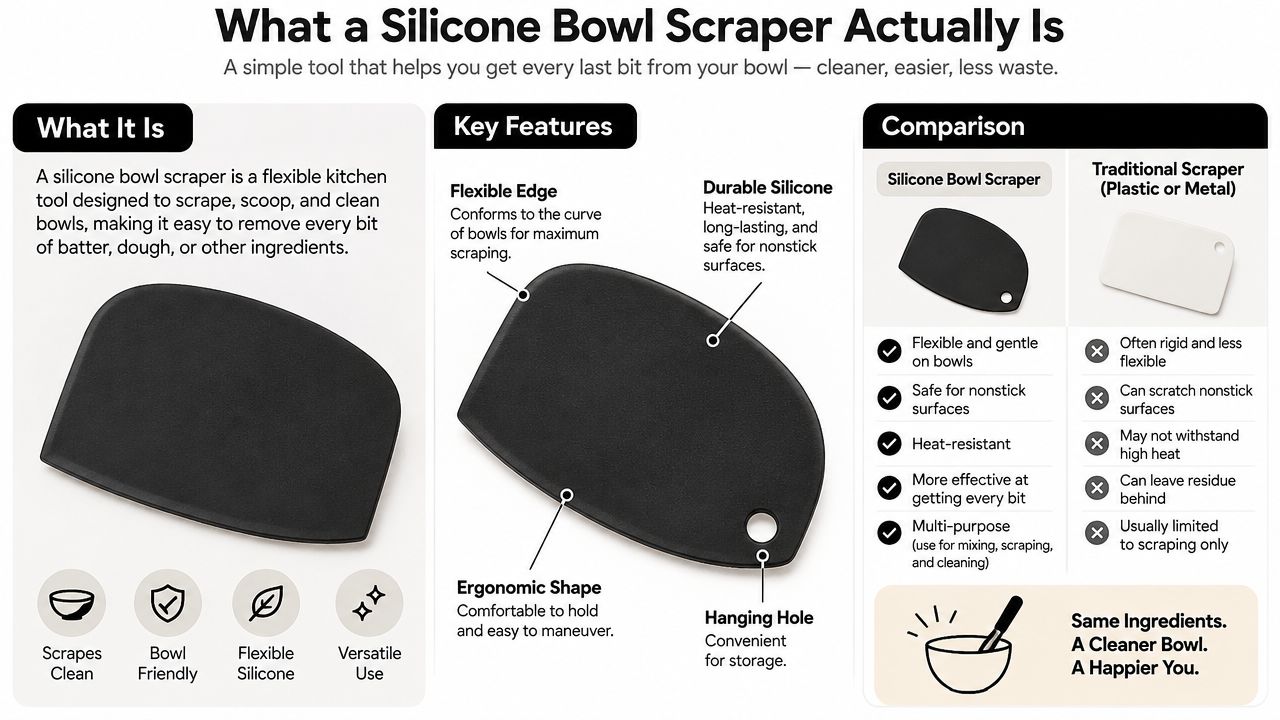
The important distinction is between a bowl scraper and a bench scraper. A bowl scraper is shaped to empty a vessel. A rigid bench scraper is better for cutting, dividing, and moving dough across a flat work surface. A flexible silicone tool can help release sourdough from a tub, but it shouldn't be expected to portion a firm dough with the precision of a rigid blade.
Why Home Bakers Choose Silicone Over Other Materials
Silicone earns its popularity through several practical advantages, but none of them makes every silicone scraper ideal for every job. The decision comes down to the balance between flexibility and rigidity.
Heat, surfaces, and cleanliness
Silicone is useful around warm ingredients because food-contact grades are formulated to remain stable across hot and cold kitchen conditions. A scraper can move softened butter, warm caramel, or a recently mixed dough without the immediate concerns associated with melting plastic. UK retail listings commonly advertise silicone scrapers as dishwasher safe and heat resistant to 260°C, while premium designs may add a rigid insert for extra control, as shown by UK silicone scraper product guidance.
Its soft edge also protects stainless steel, ceramic, glass, and coated bowls from the scratching risk of a metal tool. The surface is non-porous, so it doesn't readily hold onto moisture or food particles in the way damaged wood or porous materials can. That doesn't make it self-cleaning. Dough still collects around joints, seams, and textured handles if you don't wash those areas properly.
Silicone has a weakness too. A soft blade can bend away from stiff cookie dough, thick marzipan, or a firm sourdough mix. A reinforced or firmer design gives you more pushing power, but it may feel less graceful inside a sharply curved bowl.
For dough-specific decisions, this comparison of silicone dough scrapers is useful because it keeps bowl scraping separate from cutting and shaping.
A quick material comparison
| Material | Heat Resistance | Bowl Safety | Flexibility | Hygiene | Best For |
|---|---|---|---|---|---|
| Silicone | Broad range when properly specified | Non-scratch | Flexible to semi-firm | Non-porous and easy to wash | Bowls, batters, wet dough |
| Rubber | Varies by formulation | Usually gentle | Flexible | May retain odours as it ages | General scraping |
| Wood | Limited around prolonged heat and moisture | Gentle | Rigid | Requires careful drying | Handling and traditional kitchen work |
| Metal | Strong, but use depends on finish | Can scratch coatings | Rigid | Easy to wash | Cutting and bench work |
The best choice depends on your equipment. A stand-mixer user may value a longer blade with enough firmness to reach beneath the paddle. A sourdough baker working with a wet dough may prefer a softer edge that releases the mixture without tearing it.
Everyday Jobs a Silicone Bowl Scraper Handles
Start with the task many underestimate: clearing the bowl properly. After creaming butter and sugar, a thin layer can cling to the sides while flour settles in a lower fold. A silicone edge reaches into that curve, bringing the mixture back into the centre so the final batter is more evenly combined.
The same motion helps when folding. For a genoise, chiffon-style mixture, or crepe batter, use the scraper to cut down through the centre, sweep along the base, and turn the mixture over. The flexible edge follows the bowl rather than dragging hard across it, so you can work methodically instead of stirring in circles.
Where sourdough makes the difference
After stretch-and-folds, dough often sits in a smooth tub with a tacky layer coating the base. Slide the scraper underneath from one side, keep the edge low, and lift the dough towards the centre. With a wet dough, this is gentler than pulling with your fingers, which can leave strands behind and make the mixture harder to manage.
The tool is equally useful when transferring levain. Scrape the inside of a jar before feeding, especially around the shoulder and rim where starter dries first. During shaping, use the silicone scraper to release dough from the bowl, then switch to a firmer bench tool if you need to divide or tighten portions.
Baking also benefits from the same simple habit:
- Bannetons: Brush away loose flour and dried dough without attacking the basket fibres.
- Starter jars: Gather residue from the glass before adding fresh flour and water.
- Worktops: Lift wet scraps before they dry into a stubborn film.
- Flour preparation: Pair careful scraping with the right flour sifting method when you want a smoother, more consistent mix.
Outside bread, the scraper can empty pesto from a food processor, lift curry paste from a saucepan, level jam in a jar, or remove cream cheese from foil. Those aren't separate tricks. They all rely on the same feature, a thin edge that bends enough to maintain contact without damaging the surface.
Choosing the Right Size, Shape, and Rigidity
Choose a scraper by imagining your most awkward baking moment. Is it reaching the bottom of a deep stand-mixer bowl, lifting loose dough from a shallow tub, or pushing a firm cookie mixture across the counter? The answer matters more than a fashionable colour or an oversized product description.
Match the dimensions to the vessel
A compact scraper around 15 cm suits smaller mixing bowls and cramped drawers. A longer tool around 25 cm to 30 cm reaches more comfortably into a deep mixer bowl or Dutch oven. Longer doesn't always mean better. In a small bowl, a large blade can feel clumsy and make precise folding harder.
Width changes the feel as well. A broad blade clears a large surface quickly, while a narrower edge gives you more control around a jar, a small bowl, or the corners of a tin.
Straight edges are excellent against flat bases. Curved or spoon-shaped ends follow rounded walls and may double as spreaders when moving batter into a loaf tin. If you regularly make both cakes and sourdough, a combination design can be practical, provided the firm side doesn't become too awkward inside your bowl.
Treat rigidity as a dough decision
For a high-hydration sourdough, softness helps. The blade can slide under the dough and follow the container without pulling sharply. For stiff biscuit dough or sticky caramel, a firmer scraper is more effective because it transfers pressure instead of folding.
| Scraper Type | Best For | Key Trade-off |
|---|---|---|
| Compact, soft curved scraper | Small bowls and wet sourdough | Excellent conformity, limited pushing force |
| Long flexible scraper | Deep mixer bowls and tubs | Better reach, less precise in small vessels |
| Wide semi-firm scraper | Cakes, batters, and general bowl clearing | Covers space quickly, less delicate for folding |
| Firm reinforced scraper | Thick dough and sticky cooked mixtures | More control, weaker conformity around tight curves |
| Rigid bench scraper | Dividing and shaping on a worktop | Strong and precise, unsuitable for curved bowl walls |
Don't assume a single scraper must perform every dough task. For bowl release, choose contact and flexibility. For portioning, choose rigidity and a clean edge. That distinction prevents the common disappointment of buying a tool that is excellent in a bowl but frustrating on the bench.
UK Food Safety and Certification Explained
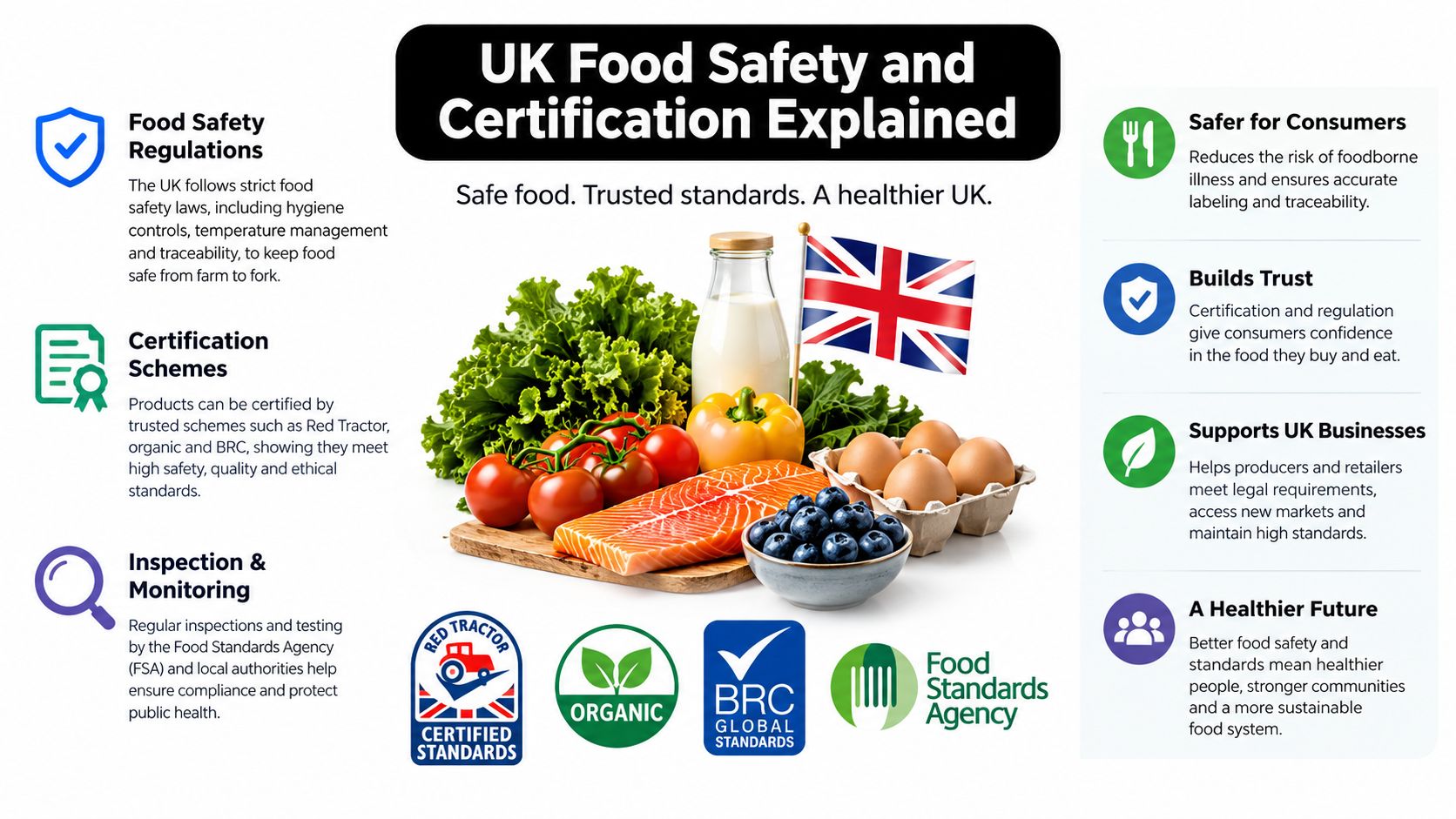
A scraper touches food repeatedly, so “food safe” on a marketplace listing isn't enough by itself. In the UK, food-contact materials are governed by assimilated Regulation 1935/2004, alongside domestic materials-and-articles-in-contact-with-food rules applying across England, Scotland, Wales, and Northern Ireland. The UK Government food-contact materials guidance explains the framework and the importance of suitable documentation.
For a home baker, the practical question is simple: can the seller show that the material is intended for direct food contact and supported by compliance evidence? A credible supplier should be able to provide a Declaration of Compliance and migration-testing information. Those documents matter more than a vague badge or an attractive product photograph.
What to check before buying
Look for:
- A clear food-contact statement, ideally supported by a Declaration of Compliance.
- LFGB or UKCA references, where the product and supplier use those certifications appropriately.
- A stated temperature range, rather than an unexplained claim that the tool is heat resistant.
- A clean construction, with no open seam where dough can lodge between silicone and handle.
- Traceable seller information, so you can ask for the relevant documentation.
Technical food-contact silicone may be platinum- or peroxide-cured and supported by standards such as FDA 21 CFR 177.2600 or BfR XV. Supplier information on food-contact silicone standards explains why cure type and test evidence are useful checks, even though a finished kitchen tool still needs to be assessed for its intended use.
A UK-focused buyer's guide cites a 2026 consumer survey in which about 30% of silicone kitchenware sold through third-party UK online platforms lacked verifiable LFGB or UKCA certification. That means roughly one in three low-cost listings may not provide enough documentation to confirm compliance, as reported by this silicone safety guide. Buy the evidence, not just the label.
Cleaning, Storing, and Knowing When to Replace
Cleaning starts before the scraper reaches the sink. Use the edge to remove as much dough, batter, butter, or starter as possible, then rinse away the remaining film. Wash it in warm soapy water, paying attention to the handle joint, the blade edge, and any recessed lettering where flour paste can dry.
Many food-grade silicone models are dishwasher safe, but check the manufacturer's instructions rather than assuming every handle and joint will tolerate repeated cycles. A dishwasher can clean the blade effectively, while heat and detergent may be harder on glued, wooden, or poorly sealed handle connections.
A routine that prevents hidden residue
- Clear the scraper immediately. Don't let wet dough cure around the seam.
- Wash the joint by hand. Run a cloth or small brush along the place where silicone meets plastic.
- Dry completely. Moisture left beneath a handle can create an unpleasant smell over time.
- Store it flat or hang it. Avoid leaving the blade bent under heavy utensils.
- Inspect before use. Check the edge after handling coloured ingredients or sticky dough.
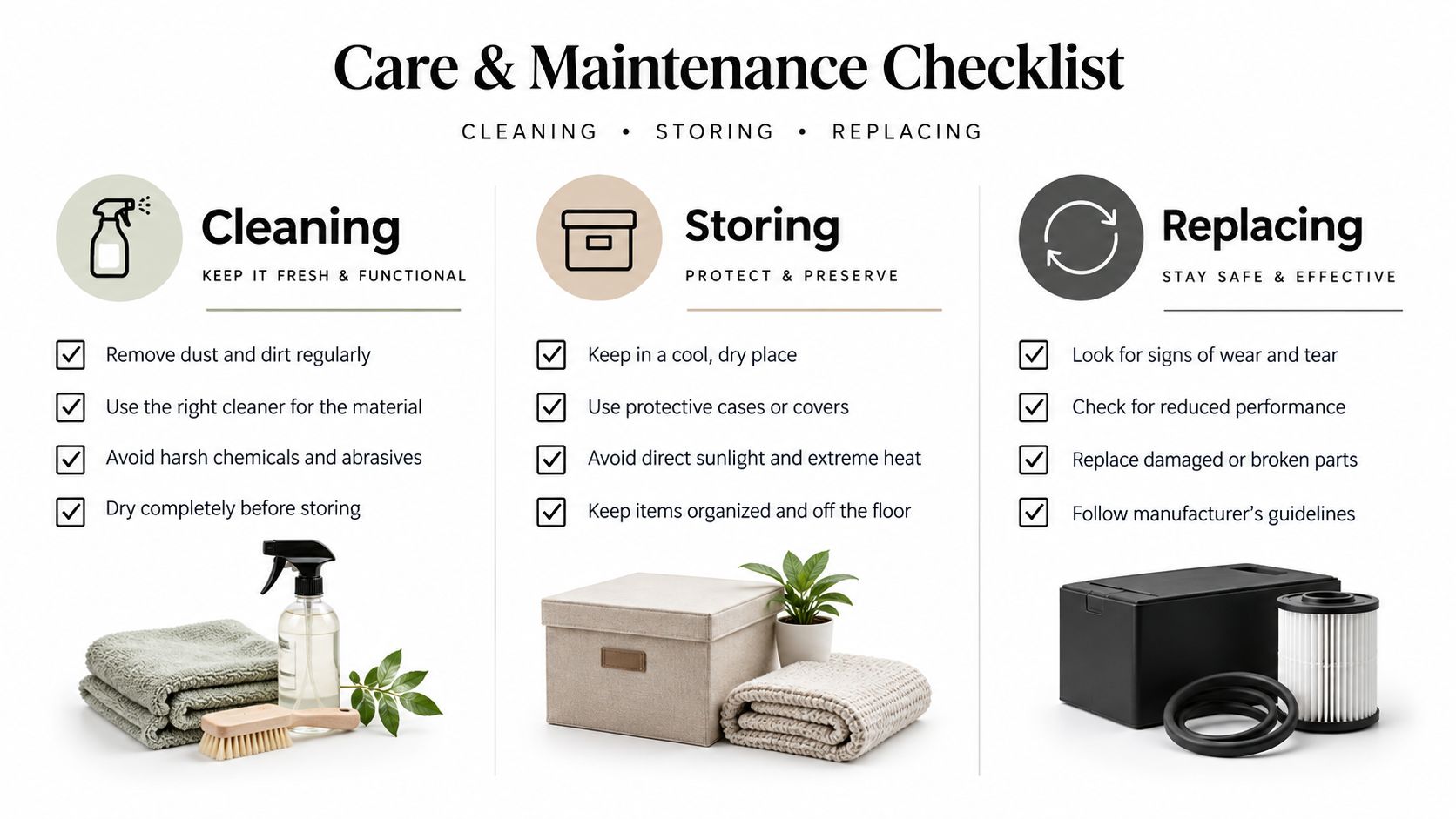
A stain isn't automatically a hygiene failure. Turmeric and beetroot can leave permanent colour, while a scraper may remain perfectly usable if its surface is smooth and clean. Replace it when cloudiness won't wash off, the blade has nicks, the edge has become rough, or the silicone has stiffened enough to lose contact with the bowl.
Nicks deserve particular attention because they can trap batter and dough beyond the reach of a quick rinse. A scraper that smells after washing, sheds material, or has a loose handle joint should also leave your working drawer.
Putting It All Together for Better Bakes
A useful buying checklist is shorter than most product pages suggest. Look for food-grade silicone, a blade that feels flexible but doesn't collapse under light pressure, a handle that suits your grip, and a size that matches the bowl you use most.
Then check the evidence. A clear UK food-contact statement, relevant compliance documentation, and a stated temperature range are stronger signals than “premium” printed on packaging. If you buy online, keep a copy of the product details and ask the seller for a Declaration of Compliance when the listing doesn't provide one.
The best scraper isn't the one with the longest feature list. It's the one you can control inside your bowl and clean thoroughly after every bake.
For sourdough, choose softness where the dough is wet and the vessel is curved. Add a firmer tool when you divide or shape on the worktop. A bowl scraper and a reusable elastic bowl cover can also make the fermentation stage tidier, but neither replaces careful observation of the dough itself.
On your next bake, keep the scraper beside your scales rather than hidden in a drawer. Use it to gather the initial flour-and-water mixture, release the dough after folding, and clear the bowl before washing. Once the size, edge, and rigidity suit your workflow, the tool stops feeling like an accessory and starts feeling like part of the recipe.
If you're building a reliable sourdough routine, visit The Sourdough Cult for live, active starter, practical starter kits, and straightforward guidance for feeding, storage, and baking. Choose the equipment you'll use regularly, pair it with a dependable culture, and make your next loaf easier to manage from the first mix to the final bake.


