

You know the moment. The sourdough starter's been fed, the dough's mixed, and the bowl is sitting on the counter while you're deciding whether to leave it as it is or drape a tea towel over the top and hope for the best. Then you come back later and find a dry skin on the surface, a cover that's slipped aside, or a bowl that's picked up more kitchen dust than you'd like.
That's where an elastic bowl cover earns its place. It's a reusable cover that stretches over a bowl rim to help keep dough protected while it rises, rests, or sits in the fridge between stages. In a UK home-baking culture where 71% of respondents were baking more than once a week during lockdown, up from 31% before lockdown, simple reusable accessories stopped feeling like a novelty and started making sense in everyday baking routines, especially for people working with dough more often (national survey report).
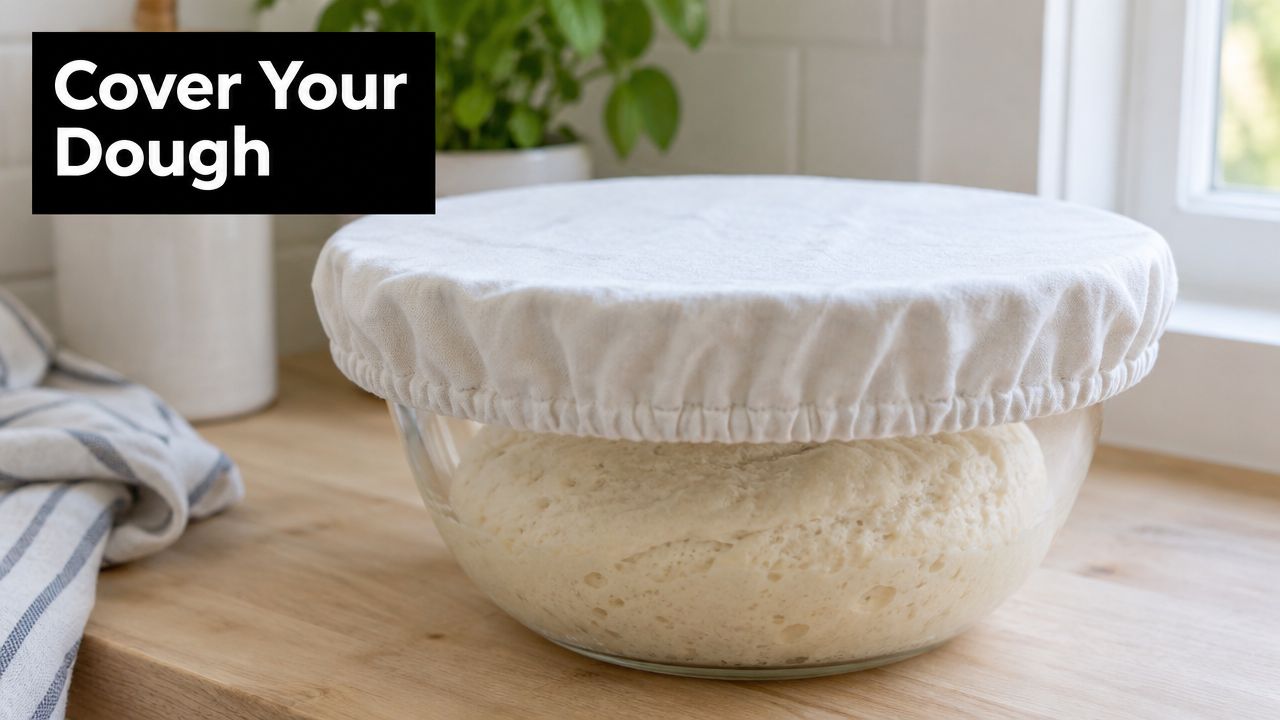
For sourdough bakers, the detail that matters isn't just “does it cover the bowl”. It's whether the cover helps the dough stay hydrated, stay clean, and keep fermenting in a stable environment while you're not looking at it. If you're new to this, don't worry, the parts are easier than they sound, and the practical decisions are very manageable once you understand what the cover is doing and why fit and material matter so much for proofing. For a broader sourdough starting point, the artisan's initiation guide gives useful context, but this guide stays focused on the bowl cover itself and how it behaves with active dough.
Table of Contents
- Introduction to Elastic Bowl Covers for Home Bakers
- What an Elastic Bowl Cover Actually Does for Dough
- Materials Compared and How to Choose the Right One
- Getting the Right Fit for Your Bowls and Proofing Vessels
- Food Safety and What Makes a Cover Suitable for Sourdough
- Everyday Use Washing and Storage Tips That Keep Covers Fresh
- Choosing Your Cover and Baking With More Confidence
Introduction to Elastic Bowl Covers for Home Bakers
A starter that's ready for its overnight rest behaves a bit like a sleeping baby. It doesn't need fuss, but it does need the right environment. If the cover is too flimsy, the dough surface can dry out. If it's too loose, it can slide aside and leave the bowl exposed right when fermentation is doing its slow, useful work.
An elastic bowl cover is a reusable cover with a gathered edge or stretch band that grips the rim of a bowl. In practice, that means you can cover mixing bowls, starter jars, and proofing vessels without reaching for clingfilm every time. That matters in kitchens where dough gets mixed, rested, folded, and stored across several stages, because the same cover can move with the process instead of being thrown away after one use.
Why frequent bakers notice the difference
The appeal is practical, not decorative. Reusable bowl covers suit the rhythm of home baking because they're easy to lift, replace, wash, and use again. That makes them a sensible option for people who want a lower-waste alternative to disposable wrap while still keeping dough protected between handling steps.
Practical rule: if your dough needs to rest more than once, the cover should be part of the workflow, not an afterthought.
This guide keeps the language plain and the decisions grounded in actual baking use. You'll see what the cover does, how to compare materials, how to judge fit, and what food-safety questions matter when the bowl holds wet, acidic sourdough rather than a dry salad. By the end, you should be able to choose a cover for countertop proofing and fridge storage with confidence.
What an Elastic Bowl Cover Actually Does for Dough
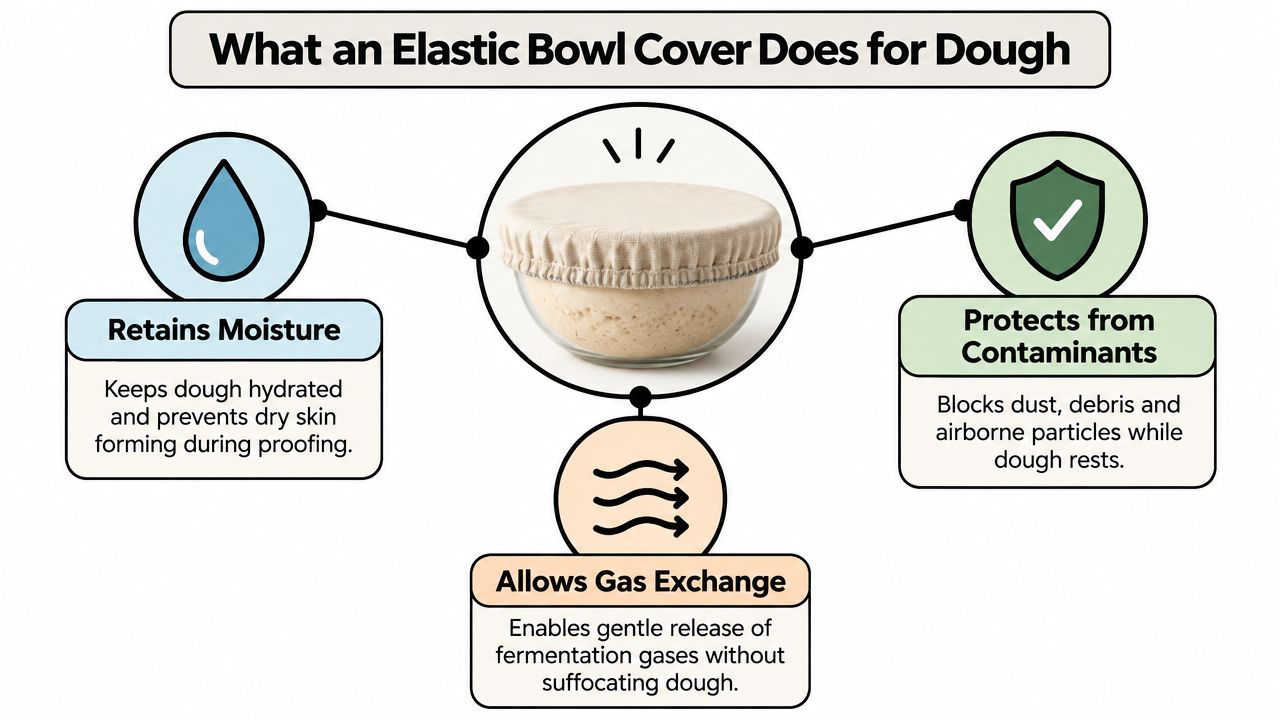
Freshly mixed dough needs a covered space that holds in moisture without boxing it in. An elastic bowl cover gives it that balance. It sits over the bowl like a soft hat with enough give for the dough to expand while the surface stays protected.
Three jobs that matter during proofing
First, it helps retain moisture. That keeps the top from drying into a skin, which can slow expansion and leave the loaf uneven. With a cover in place, the dough surface stays supple while fermentation continues below.
Second, it helps protect from contaminants. Dust, stray flour, and kitchen particles do not belong on a starter or a proofing loaf. A cover adds a simple barrier while the bowl rests on the counter or in the fridge.
Third, it supports gentle gas exchange. Dough keeps producing gas during fermentation, and it needs room to rise without being pressed into a rigid seal. A cover that grips the rim but still moves with the bowl gives the dough a more natural proofing environment, similar to the enclosed warmth bakers want from Dutch oven bread baking, just without trapping the dough too tightly.
Dough proofing works best when the container protects the surface without fighting the rise.
Clingfilm can hold moisture, but it is often a one-use fix and can sit awkwardly on wide bowls. A tea towel lets air move freely, though it does not hold humidity as well and can slip if the bowl is bumped. A lid works well on rigid containers, but it can feel too stiff for bowls that need a little flexibility as the dough expands.
What you can look for at the surface
A cover is doing its job when the dough stays smooth and slightly glossy instead of drying out at the edges. The bowl underneath should not show a hard ring of crust around the rim. That is the everyday sign that the dough's environment stayed steady enough for fermentation to keep moving.
Materials Compared and How to Choose the Right One
The right material depends on how you bake, where you proof, and how often the cover meets wet dough. For sourdough, the question isn't only “will it stretch”. It's also whether the fabric or film can handle moisture, repeated washing, and the more acidic side of fermentation without becoming awkward to use.
Cotton, linen and silicone at a glance
Natural fabrics like cotton and linen are familiar because they feel breathable and kitchen-friendly. That makes them a comfortable choice for short counter proofs where you want a soft cover that doesn't feel fussy. They're easy to pair with a reusable routine, though they're not waterproof, so condensation and sticky dough can mean more frequent washing.
Silicone sits at the other end of the feel spectrum. It's wipeable and tends to be better suited to firmer sealing on smooth containers, which can be handy for fridge storage. The trade-off is that it can sit more like a cap than a wrap, so if you're using irregular bowls or bannetons, the fit can be less forgiving.
PUL and waxed fabrics are often chosen because they aim to combine usability with a more protective surface. For sourdough, that sounds attractive, but the question is whether the actual product is appropriate for food contact and for the wet, acidic conditions of proofing. A cover that seems durable on paper still needs to make sense around starter, dough, and repeated cleaning.
A quick comparison table
| Material | Best For | Breathability and Care |
|---|---|---|
| Cotton | Short countertop proofing and simple everyday use | Breathable, washable, familiar to handle, but not waterproof |
| Linen | Countertop use where you want a natural-feeling cover | Breathable and washable, with a slightly firmer feel than cotton |
| Silicone | Fridge storage and smooth containers | Wipeable and reusable, but less flexible around odd-shaped bowls |
| PUL | Frequent use where a waterproof layer is helpful | Protective and easy to clean, but suitability for food contact needs checking |
| Waxed fabrics | Bowl coverage where a water-resistant surface appeals | Reusable and protective, though care and food-contact suitability matter |
The smartest choice is often the one that fits your actual routine, not the one that sounds most technical. If you mainly proof dough on the counter for a few hours, breathable fabric may feel easiest. If your starter spends time in the fridge, a more wipeable surface can be more convenient.
If you're already thinking in terms of practical baking tools, the same logic that helps you choose a silicone dough scraper applies here, too. Pick the tool that matches the mess, the bowl, and the pace of your kitchen.
Getting the Right Fit for Your Bowls and Proofing Vessels
Fit sounds simple until the dough begins to rise and the cover starts acting like the wrong kind of lid. Too tight, and it can press back against the dough or make the cover awkward to keep in place. Too loose, and it slips, tents badly, or leaves the surface exposed.
How to judge size without overthinking it
Start with the bowl rim. That's the measurement that matters most because the elastic needs to grip where the cover meets the vessel. A cover with enough give can often stretch across more than one bowl size, which is useful if you alternate between a mixing bowl, a starter jar, and a larger proofing bowl.
Depth matters as well. A shallow bowl is easy to cover, but a deep container needs enough fabric to sit securely without being pulled taut over the top. If the cover looks strained before the dough has even started its final rise, that's a sign it may not be the right match.
Quick checks before you commit to a cover
- Check the rim grip: the elastic should sit snugly without forcing the bowl out of shape.
- Watch the fabric angle: if the cover slopes too steeply into the bowl, it may be too small for comfortable proofing.
- Look for stable coverage: the edge should stay put when the bowl is moved from counter to fridge.
- Test with a full bowl: a good fit still works when the vessel is filled with dough or starter, not only when it's empty.
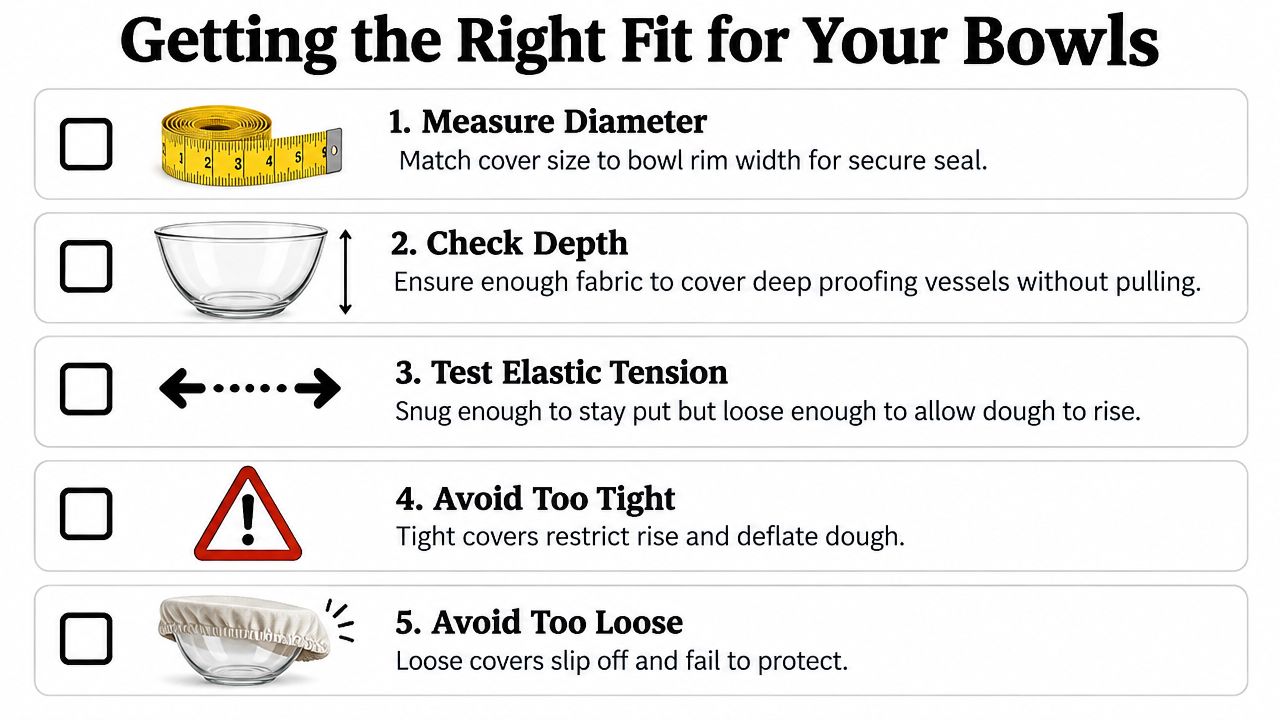
Straight-sided containers, mixing bowls, and bannetons each behave a little differently. A stretchy cover can adapt to some of that variation, but it can't make a very small cover magically fit a very wide bowl. The safest mindset is to measure once, then choose for the bowls you use most often.
If the cover has to be wrestled into place every time, it's probably the wrong size for your baking rhythm.
Food Safety and What Makes a Cover Suitable for Sourdough
Sourdough changes the safety conversation because the dough isn't neutral. It's wet, acidic, and often left in contact with its cover for a long stretch of time. That makes the materials around it more important than they would be for dry storage.
In the UK, food-contact materials are covered by the Materials and Articles in Contact with Food (England) Regulations 2012, which sit within the wider framework of Regulation (EC) 1935/2004. The basic idea is straightforward. Anything that touches food shouldn't transfer anything into it in amounts that could endanger health or change the food's composition or smell, taste, or texture, and good manufacturing practice matters too (UK food contact materials guidance).
Why every part of the cover matters
For a sourdough cover, that means looking at the fabric, the elastic, the stitching, any ink, and any coating as food-contact-relevant parts. It's not enough for the outer layer to look neat. If one component isn't suited to food contact, the whole item deserves scrutiny, especially when it's sitting over moist dough for fermentation.
The contact conditions matter because fermentation creates a more demanding environment than dry pantry storage. Moisture, acidity, and temperature all affect how materials behave over time. That's why a supplier should be able to explain the intended use clearly, rather than offering only a vague “food safe” label.
What to ask before you buy
- Ask for conformity information: request documentation that matches the actual material and the intended food contact use.
- Check the construction: make sure the elastic, stitching, and any printed elements are also suitable.
- Ask about repeat use: a reusable item should come with evidence for repeated contact, not just a one-time claim.
- Match the product to the dough: if the cover will sit over wet or acidic sourdough, ask whether that exact use has been considered.
For plastic food-contact articles, the UK plastics rules set 10 mg/dm² overall migration limits, or 60 mg/kg in some cases, and testing uses food simulants matched to the food type, including fatty, acidic, alcoholic, or aqueous simulants (UK plastics regulation). That detail matters because sourdough isn't dry storage. A cover used over starter or fermenting dough should make sense under realistic conditions, not just a generic “kitchen use” description.
Everyday Use Washing and Storage Tips That Keep Covers Fresh
An elastic cover stays useful when it's treated like a kitchen tool, not like a disposable afterthought. The routine is simple. Use it, clean it when needed, dry it fully, and store it so the elastic doesn't get stressed.
A repeatable routine for sourdough bakers
After bulk fermentation or shaped proofing, shake off loose flour first. If the cover only has a light dusting, airing it out may be enough before the next use. If it's touched sticky dough, starter residue, or condensation, wash it promptly so smells and residue don't build up.
Drying matters more than people sometimes expect. A damp cover folded into a drawer can pick up odours and lose that fresh kitchen feel. Let it dry fully before storing it flat or loosely folded, and avoid cramming it under heavy containers where the elastic can be stretched out over time.
A few habits that make the cover last
- Rotate more than one cover: this keeps one from being overused while another is in the wash.
- Keep it away from sharp tools: bench knives, dough scrapers, and box grater edges can snag fabric.
- Use it where it fits best: a cover that lives on the right bowl is easier to maintain than one that's constantly being forced onto the wrong container.
- Watch condensation in the fridge: wipe the bowl rim before refitting the cover if moisture builds up.
A reusable cover fits neatly into the broader rhythm of regular home baking. People who bake often need tools that are easy to return to, easy to wash, and ready for the next batch without fuss. That's where low-waste accessories become practical instead of symbolic.
Choosing Your Cover and Baking With More Confidence
The simplest way to choose an elastic bowl cover is to think in four parts, purpose, material, fit, and care. If you mostly proof at room temperature, a breathable fabric cover may be enough. If you move dough in and out of the fridge often, a wipeable, reusable option may suit your routine better.
A good cover isn't about gadget appeal. It's about giving your dough a stable surface environment so fermentation can do its quiet work without drying, contamination, or awkward handling getting in the way. That small bit of consistency can make home baking feel calmer, especially when you're still learning how dough behaves from one feed to the next.
Pick one cover, use it on your next proof, and watch what changes. The dough should feel easier to protect, the bowl should be simpler to manage, and your baking routine should feel a little more organised.
If you want more practical sourdough guidance, tools that suit real home baking, and starter-led advice without the clutter, visit The Sourdough Cult. It's a straightforward place to find starter-focused essentials that pair well with the kind of reusable baking habits covered here.


