

You shape a loaf, set it aside, and come back to find it's started creeping across the bench instead of holding its round. That's the moment most UK home bakers start looking at bread proving baskets and wondering whether the basket is the missing piece, or just another bit of kit to buy and regret later. In practice, a good proving basket does one simple job very well, it helps dough keep its shape while the final rise builds strength.
Table of Contents
- Why Bread Proving Baskets Matter in UK Home Baking
- Choosing Between Wood-Pulp and Cane Proving Baskets
- How to Pick the Right Shape and Size for Your Loaf
- Caring for Your Proving Basket So It Lasts
- How Proving Baskets Shape Crust and Loaf Structure
- Where to Buy Proving Baskets in the UK
- Are Proving Baskets Still Worth Buying
Why Bread Proving Baskets Matter in UK Home Baking
A lot of British bakers meet the proving basket after one too many flat loaves. The dough looked fine at shaping, then an hour later it had relaxed into a soft puddle, and the oven spring never really had a chance. A bread proving basket gives that dough a controlled space to rise in, so the loaf can hold itself upright rather than spreading out sideways.
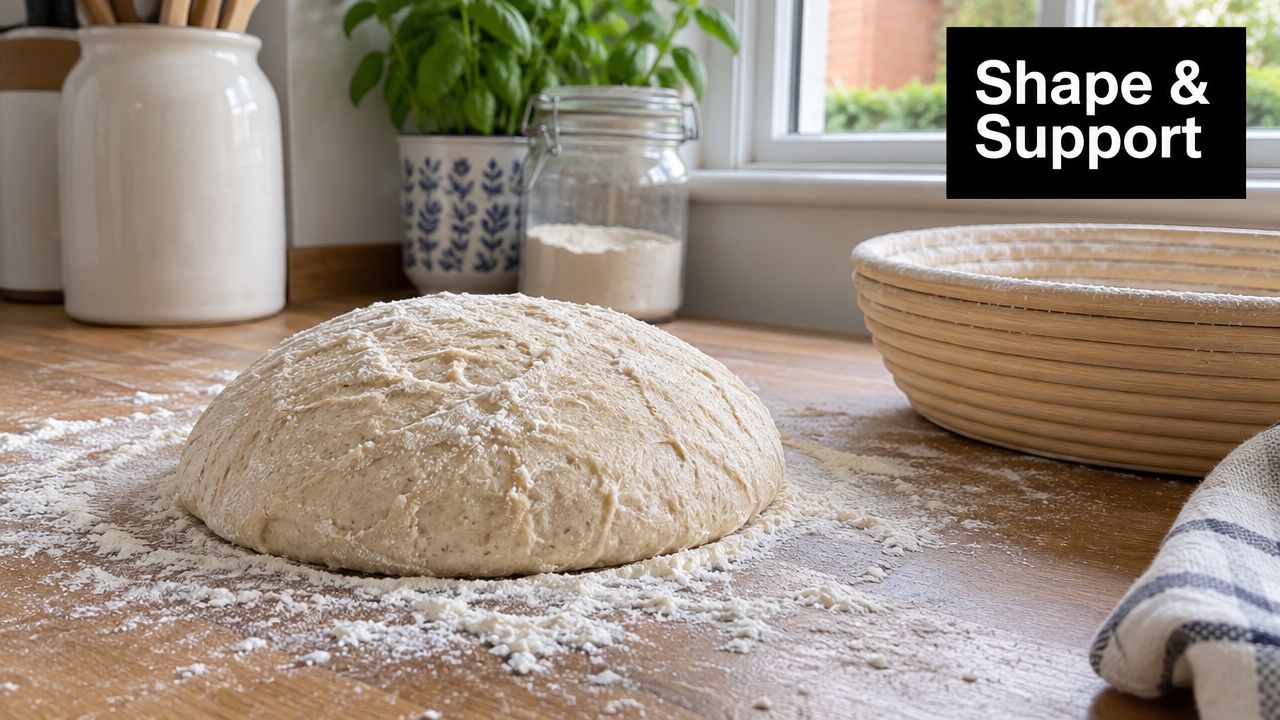
A tool with proper history behind it
These baskets are not a sourdough trend that appeared out of nowhere. UK and European sources describe proving baskets as being used for probably thousands of years, and English bread-container history shows decorative bread baskets appearing during the reign of George II, 1727 to 1760 (Virtuous Bread). One historical note also mentions later basket styles with separate fresh and stale compartments, which shows how bread storage and handling kept adapting over time.
That history matters because it explains why the basket still works so well now. Before refrigeration and before modern tins became the default, shaped loaves needed support during their final rise. The basket solved a real bakery problem, and it still does.
Practical rule: if a shaped loaf needs support, the basket is there to protect the shape, not to make the process fancier.
The modern UK sourdough revival has brought that old tool back into everyday home baking. A basket is still just a basket, but it turns fragile, slack dough into something that behaves properly in the oven. That's why it earns its place on the counter, even when the rest of the kit can stay minimal.
Choosing Between Wood-Pulp and Cane Proving Baskets
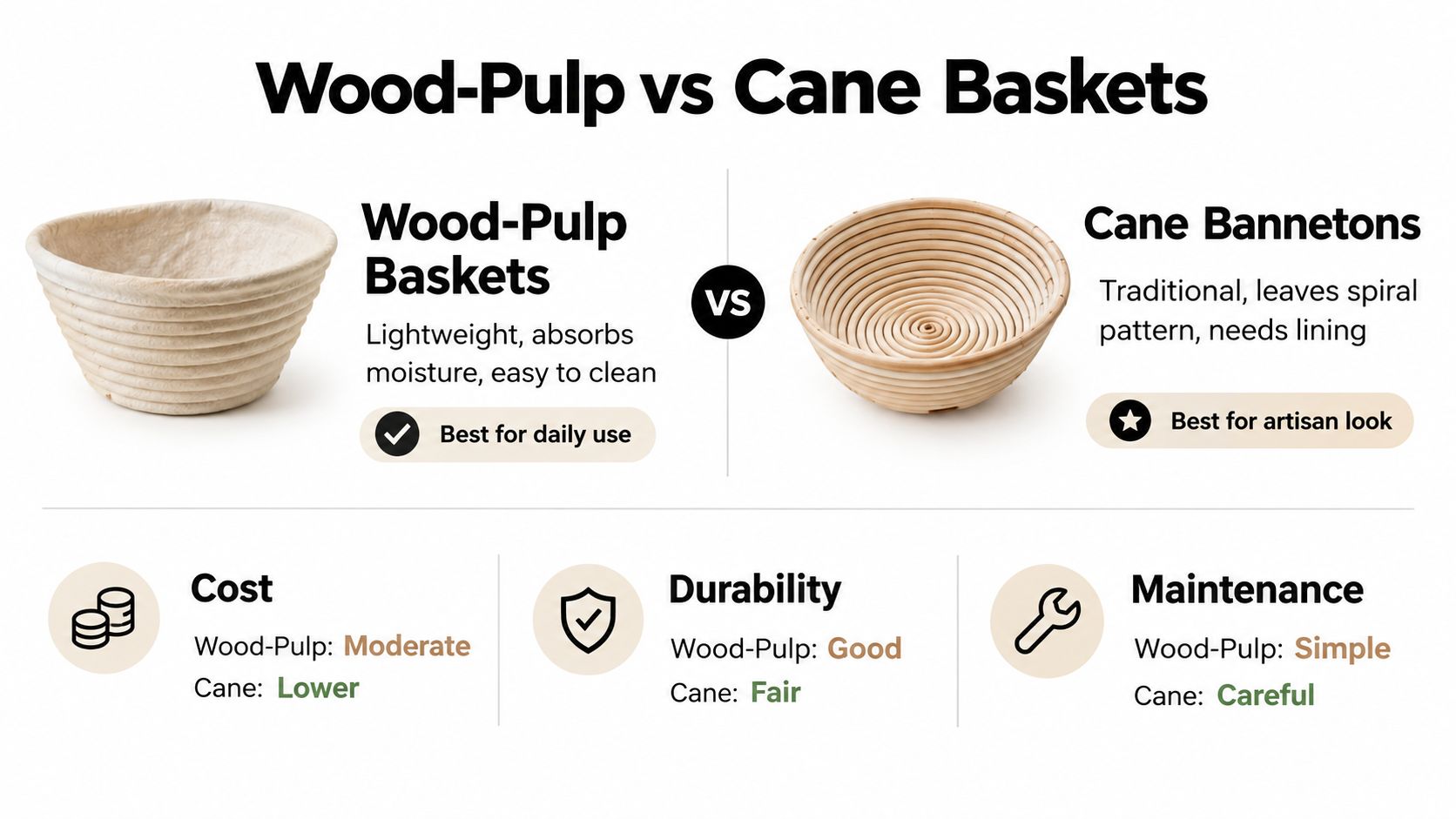
Choosing between wood-pulp or wood-fibre baskets and cane or rattan bannetons comes down to how your dough behaves, not to looks. The choice changes how much moisture stays on the surface during the final proof, and that affects shape, skin tension, and crust.
Wood-pulp suits wetter dough more easily
Wood-fibre and wood-pulp baskets are naturally absorbent. UK guidance says they pull moisture from the dough surface and release it gradually, which helps build a taut skin, supports rise, and encourages a crisper crust (The Bread Company). For higher-hydration sourdough, that can make life easier because a wet surface is less likely to spread before baking.
That is the practical appeal. If you are still learning how your dough behaves, wood-pulp does some of the surface management for you.
Cane rewards better flouring and more attention
Cane and rattan work differently. UK baking guidance says they allow air to move around the dough while absorbing some moisture, and they often work best with a linen or muslin liner that has been well floured to reduce sticking (BakeryBits). The same guide warns that a basket kept too damp, or covered too heavily, can stick and lose that dry skin you want on the loaf.
Practical rule: if you want the classic basket pattern and you do not mind a bit more handling, cane is satisfying. If you want simpler moisture control, wood-pulp is easier.
One useful UK guide says around 70% hydration is a sensible starting point for new banneton users before moving to wetter doughs as the basket seasons (BakeryBits). That is not a hard limit, just a practical place to begin if you are still learning how your dough handles.
For many home bakers in the UK, the decision is trade-off, not tradition. Wood-pulp is more forgiving. Cane gives a more defined finish, but it asks for better flouring and cleaner technique.
How to Pick the Right Shape and Size for Your Loaf
The usual advice is too thin. It says round for boules and oval for bâtards, then leaves you to guess the actual size. That's where most UK buyers get stuck, because the retail choice is broad and the labels don't always tell you how much dough the basket really suits (BakeryBits equipment range).
Match the basket to the dough weight
Here's a practical way to think about it. If you bake one standard home loaf at a time, don't buy by shape alone. Buy by the weight of dough you normally handle.
| Basket Shape | Diameter or Length | Suitable Dough Weight |
|---|---|---|
| Round | 16 to 18 cm | About 500 to 600 g |
| Round | 20 to 22 cm | About 600 to 800 g |
| Oval | Short oval | About 700 g |
| Oval | Long baguette-style | For longer, shaped loaves |
The reason this matters is simple. A basket that's too large lets the dough spread instead of rise. A basket that's too small compresses the loaf and restricts oven spring. Either way, the loaf loses shape before it reaches the oven.
Choose for your loaf style, not the shelf label
Round baskets suit boules, oval baskets suit bâtards, and longer baskets are for shaped loaves where length matters more than height. If you bake mostly one family of loaf, that's easy enough. If you switch between dough styles, a single versatile mid-sized round basket is often more useful than three specialist sizes gathering dust.
A lot of UK content skips the practical bit and stops at shape names. That's not enough when you're standing in front of a product listing trying to decide whether a basket will fit your usual dough. If you want a second opinion on the oval end of the market, this banneton guide is worth a look.
Caring for Your Proving Basket So It Lasts
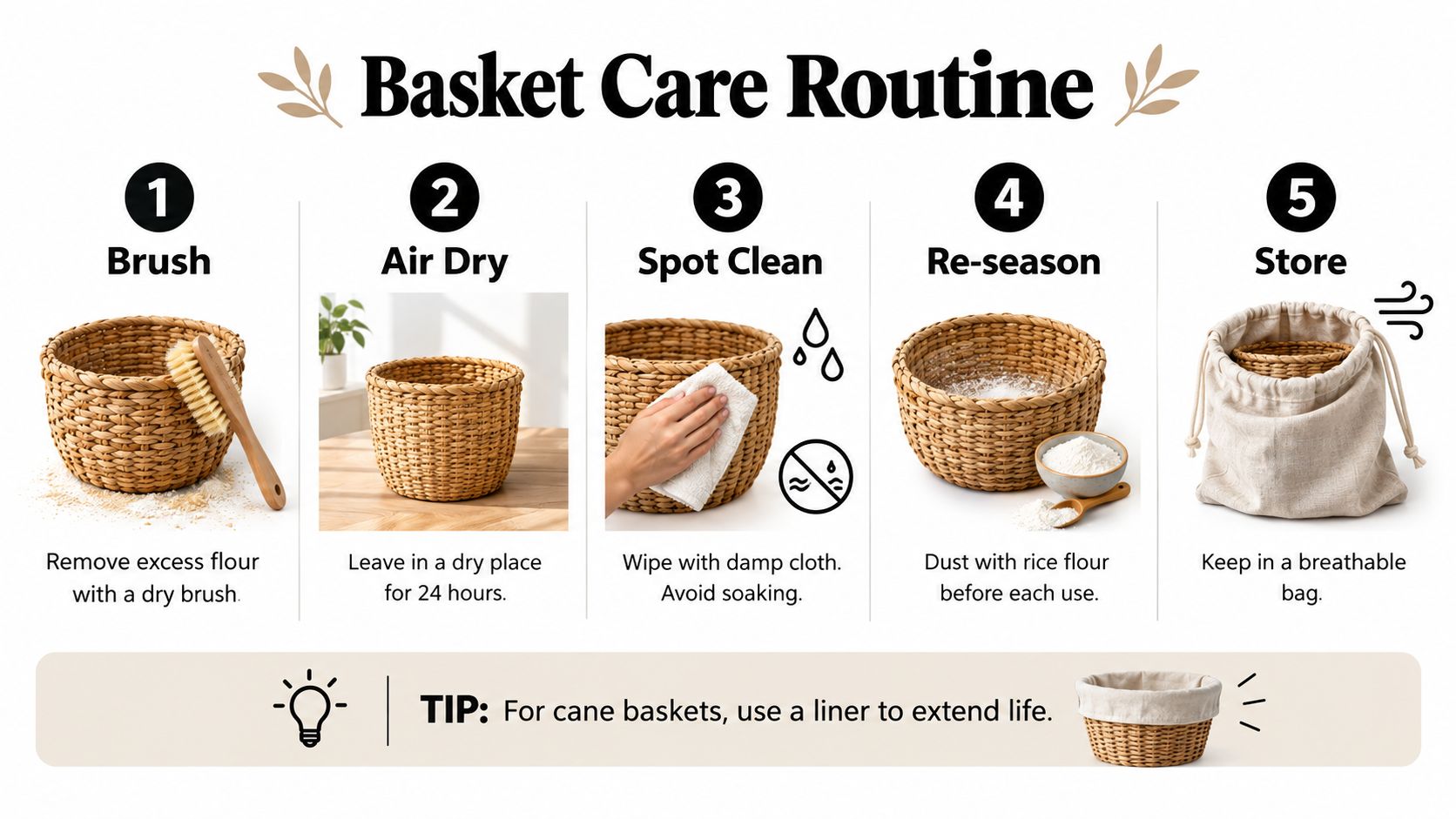
A proving basket improves with use, but only if you treat it according to the material. The biggest mistake is washing everything the same way. Wood-pulp, cane, linen-lined baskets, they all behave differently once flour, moisture, and dough start building up.
Wood-pulp needs dryness, not soaking
For wood-pulp baskets, keep water away from them. Tap out loose flour, brush away residue, and store them somewhere dry. The fibre does the job best when it stays structurally sound, not damp and soft. A light dusting of flour before the next proof is usually enough.
Cane wants brushing, airing, and a little seasoning
Cane and rattan baskets need a similar dry routine, but they tolerate a little more handling. Empty out loose flour after use, brush away stubborn bits, and only rinse if you really have to. If you do rinse, let the basket air-dry completely before it goes back into storage.
A new cane basket benefits from thorough flouring before its first use. Over time, those flour layers build into a natural release surface, which is why older baskets often behave better than brand-new ones. That's not magic, it's just flour and time doing their job.
Keep baskets out of sealed plastic bags. Trapped moisture is what causes trouble, not the flour itself.
Storage matters more than many think. If the basket can breathe, it usually stays usable for much longer. If it sits damp in a closed container, it starts moving in the wrong direction quickly.
How Proving Baskets Shape Crust and Loaf Structure
The basket does more than hold dough at the end of proofing. It helps set the outer skin of the loaf, and that skin affects how the bread opens up, holds shape, and browns in the oven. Proving baskets are used for free-form loaves during the final proof, and they help create the familiar spiral pattern many sourdough bakers want (BakeryBits guide).
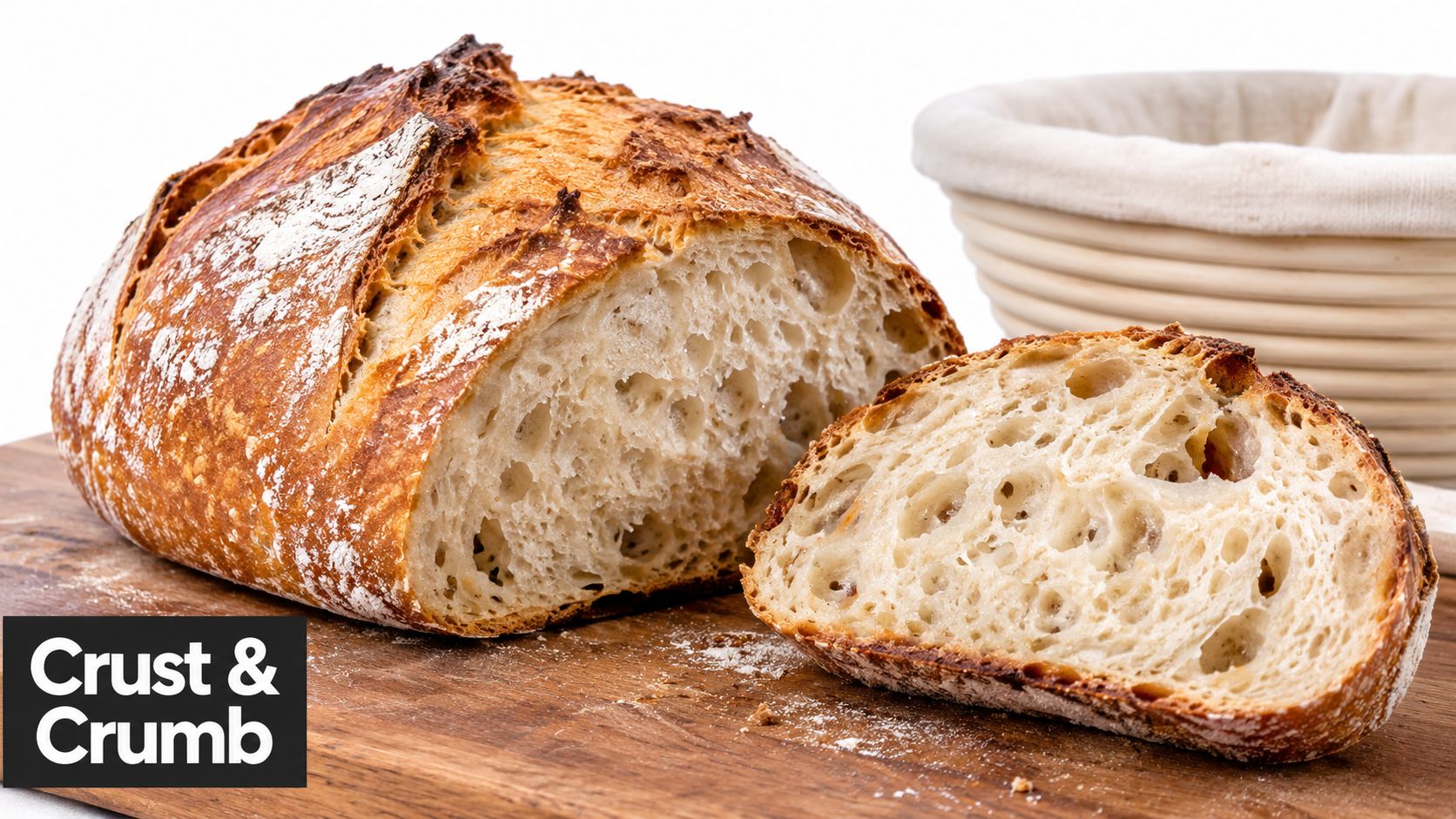
A traditional banneton was usually wickerwork or reeds, often lined with linen to reduce sticking. The floured surface dries the skin slightly and makes the dough easier to handle before baking. That small change matters. A tighter, drier skin resists spreading and gives the loaf a better chance of rising upward once it hits heat.
UK baking has also shifted. The same guide notes that rectangular loaves were described as virtually the only shape commonly sold in the UK until about five years ago. That context matters because a lot of home bakers are still working through the move from sliced tin bread to artisan free-form loaves, and basket choice sits right in the middle of that shift.
A basket that is too damp or too large works against the dough. A well-fitted, well-floured basket helps the loaf stand tall, score more cleanly, and bake with a crust that looks intentional rather than slumped. If a loaf keeps spreading, the basket is often part of the problem before the oven ever comes into play.
Practical rule: if you want stronger oven spring, tighten the dough surface and choose a basket that supports the loaf instead of leaving it room to wander.
That is why a proving basket earns its place. It shapes the loaf before the bake starts, and the bake locks in the work already done on the bench.
Where to Buy Proving Baskets in the UK
If you bake at home in the UK, specialist baking retailers are usually the safer bet. Vague marketplace listings often hide the details that matter, so check whether the basket is lined or unlined, what size is given in centimetres, and whether the seller explains the material and care properly.
Good UK suppliers usually separate wood-pulp, cane, oval, round, and baguette-style baskets clearly. That makes comparison much easier, especially if you already know roughly what dough weight you work with. It also helps you match the basket to the loaf you bake, whether that is a boule, a bâtard, or a longer shape.
Look for listings that explain how the basket performs in use, not just how it looks in the photo. A clean product page should tell you the shape, lining, and size in plain terms. If it does not, there is a fair chance the basket will not fit your dough properly. Buying once and buying well is still cheaper than replacing a basket that never suits your loaves.
For bakers who want a more minimal setup alongside their proving basket, this bread pan guide is a useful companion piece. It sits in the same practical world, where the question is what improves the bake rather than what looks neat in a bundle.
Are Proving Baskets Still Worth Buying
There's a fair question behind all this. If fewer are searching for niche baking gear, does a proving basket still deserve a place in the kitchen? UK Amazon-style market research reported search demand for bread proofer-related terms fell 35.4% over 90 days and bread starter kit demand fell 43.5% over 90 days, while a broader UK search-demand report found food and drink search volume declined 10.5% overall in 2026 (Flapen). That suggests a softer, more selective market.
A proving basket still makes sense because it isn't a one-job gadget. It's simple, durable, and useful across different dough styles. It doesn't need electricity, it doesn't need software, and it doesn't become obsolete when a trend cools.
For regular bakers, the value comes from consistency. A basket helps stop failed proofs, improves shape, and makes the loaf easier to move into the oven with confidence. That's the kind of quiet usefulness that matters more than search trends.
If you bake often, the basket stops being an optional extra and becomes part of your normal workflow. If you bake only occasionally, one good basket is still easier to justify than a pile of single-purpose kit. That's why it remains one of the most sensible purchases in UK sourdough equipment.
If you want reliable sourdough basics without the clutter, The Sourdough Cult is a good place to start. They focus on practical starter-led baking, clear guidance, and the kind of straightforward equipment that suits real home kitchens. If you're choosing between baskets, starters, and the rest of the setup, it's worth a look.


