

Your sourdough is proofed, the oven is properly hot, and the loaf is sitting on the worktop looking better than the last one. Then the blade catches, the dough drags, and the carefully shaped boule tears in the wrong place. A good bread lame prevents that last-minute panic by giving you a thin, sharp edge and enough control to score decisively.
For most UK home bakers, the best choice isn't the most beautiful walnut handle or the most expensive professional tool. It's a lame that feels secure, accepts readily available replacement blades, and suits how often you bake. The guidance below focuses on safety, replacement cost and scoring confidence, not equipment collecting.
Table of Contents
- What a Bread Lame Actually Does at the Worktop
- Handle Types and Blade Families Explained
- Comparing Popular Lames Side by Side
- Scoring Technique and Why It Changes the Tool You Need
- Matching the Right Lame to How You Actually Bake
- Do You Even Need a Dedicated Lame
- Safe Handling, Blade Changes and Storage
- Which Lame Should You Buy for Your Kitchen
What a Bread Lame Actually Does at the Worktop
A bread lame is a razor-edged tool for cutting the surface of proofed dough immediately before baking. The blade should skim through the outer skin in one controlled movement, rather than crushing or stretching the dough underneath.
That cut gives the loaf a planned route for expansion. As the dough heats, trapped gases and steam push against the scored line, allowing the crust to open there instead of splitting randomly across the weakest part of the loaf. You get better control over the shape, the bloom and, with the right angled cut, the raised flap known as an ear.
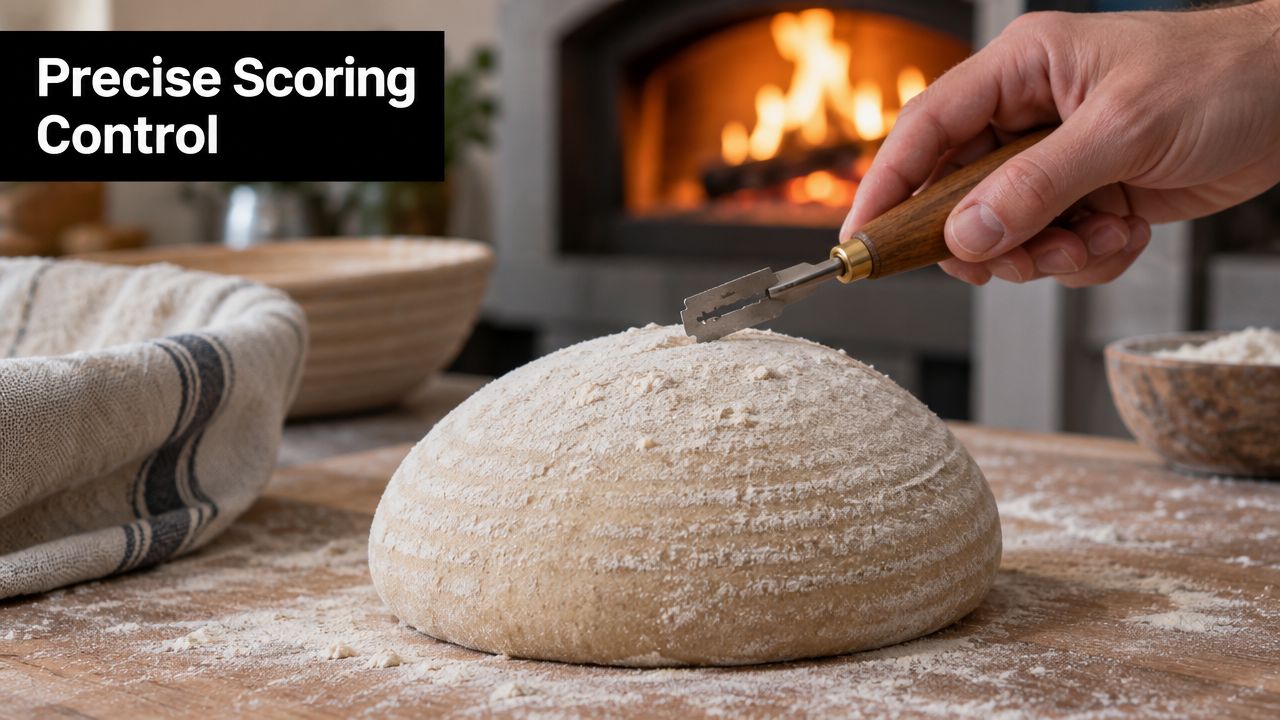
Why a kitchen knife often feels wrong
A kitchen knife can work, particularly if it has a thin, sharp blade. It usually has more blade thickness than a lame, though, and that extra metal can pull at wet dough. Scissors have their place for snipping small decorative cuts, but they don't give the same long, gliding stroke across a bâtard or boule.
A lame's short razor blade is exposed just enough to make the cut without turning the operation into a sawing motion. The handle also lets you control the blade angle while keeping your fingers away from the dough's path.
Practical rule: Score the dough on the couche, parchment or an inverted tray. Never balance a soft, proofed loaf in your hand while using a razor.
The blade doesn't need to travel far to do useful work. A clean surface incision can guide oven expansion, while a deeper, angled cut creates space for a pronounced ear. The result depends on the dough's strength and proofing as much as the tool, so no lame can rescue a badly over-proofed loaf or a shape with little surface tension.
Britain has a long-established bread culture. The Federation of Bakers history summarised by Sous Chef records the Assize of Bread and Ale from 1266, notes that UK bread-weight controls lasted roughly 750 years, and says Britons now consume the equivalent of more than 9 million large loaves every day. The modern lame is a small specialist tool within that much older tradition.
That history matters less than your worktop habits, however. If you bake sporadically, a replaceable blade and safe storage matter more than a luxury finish. If you bake often, a stable handle can turn the final score from a tense gamble into a repeatable movement.
Handle Types and Blade Families Explained
Most UK shoppers will encounter three broad lame designs. They differ less in the basic cutting action than in how confidently they let you hold the blade, control its curve and replace it when it becomes dull.
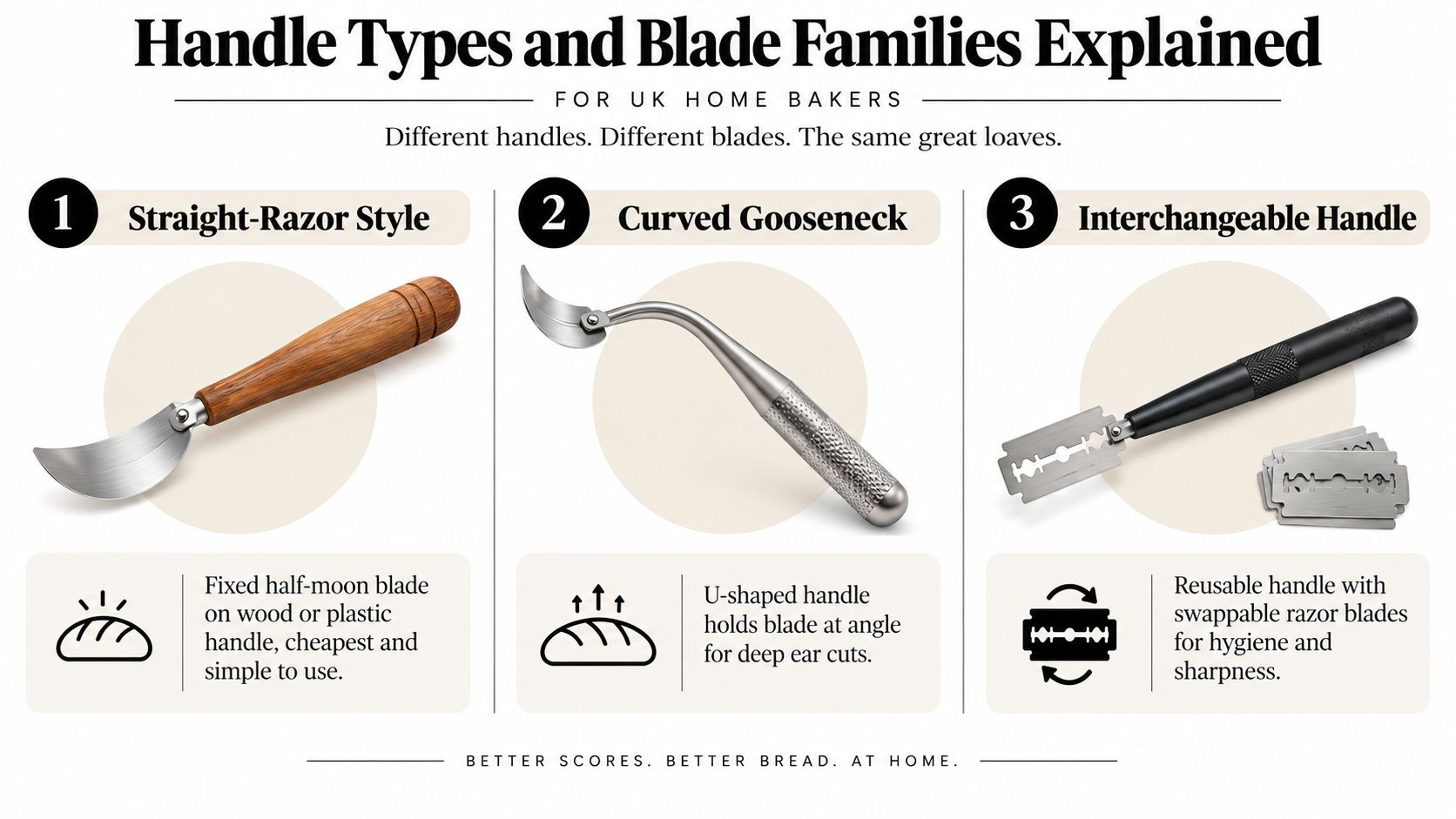
Straight-razor style
This is the simple traditional option, often built from wood or plastic with a curved half-moon blade. It has a familiar tactile feel and usually costs less at the point of purchase. The drawback is obvious: if the blade is fixed or difficult to replace, you eventually discard the whole tool rather than just changing the edge.
A fixed curved blade also suits bakers who already understand their preferred angle. Beginners can find it less forgiving because the blade exposure and curve are decided for them. The handle's diameter matters too. A slim wooden grip may feel nimble in a small hand but slippery when flour or moisture is present.
Curved gooseneck designs
A gooseneck or curved handle positions the blade away from your fingers and encourages an angled cut. That geometry is particularly useful for a long bâtard where you want the skin to lift and form an ear rather than open down the centre.
The trade-off is storage and familiarity. The shape can feel awkward during the first few scores, and a large curve takes more room in a utensil drawer. Once learned, though, it gives a confident hand position for the main slash.
UK technical guidance from BakeryBits on the Bordelaise professional lame explains that a standard replaceable razor can be mounted in a gentle curve or used straight, making this family useful when one tool has to cover different scoring styles.
Interchangeable handles
Modern lames from makers such as Wiremonkey, Challenger Breadware, Breadtopia and Cocosmile commonly use a reusable handle with a replaceable standard razor. This is my preferred format for most home kitchens because you can change the blade without replacing the grip.
The ongoing cost is easier to understand, hygiene is simpler, and a fresh edge restores the smooth glide that beginners often lose by pressing harder. The initial handle may cost more than a basic fixed wooden lame, but the design makes more sense for anyone who expects to keep baking.
Look for a secure blade mount rather than a decorative handle alone. The Sourdough Cult's guide to bread scoring blades is useful background when you're comparing grip styles and scoring tools, particularly if you're deciding whether a reusable handle suits your routine.
Comparing Popular Lames Side by Side
A comparison table needs one warning before you shop. Some brands sell directly from outside the UK, and postage or import charges can change the final price more than the handle itself. Treat any overseas list price as a starting point, not a guaranteed UK checkout total.
The market includes dedicated bakery tools at the budget end and professional models made by companies supplying bakeries across Europe. UK listings show examples from about £3.59 upwards, as recorded in BakeryBits' dough-lame range.
Popular bread lames compared for UK home bakers
| Model | Sharpness | Blade replaceable | Handle feel | Safety | UK price |
|---|---|---|---|---|---|
| Wiremonkey Bread Lame | Excellent with a fresh razor | Yes | Secure, shaped grip | Good, provided the blade is stored safely | Check current UK or import total |
| Challenger Bread Pan lame | Excellent | Yes | Comfortable and controlled | Good for confident users | Check current UK or import total |
| Breadtopia lame | Excellent | Yes | Light and practical | Good, with careful blade handling | Check current UK or import total |
| Cocosmile razor lame | Very good | Usually yes, depending on model | Simple and functional | Good if the mount is secure | Check current UK retail listing |
| Basic fixed wooden lame | Good when new | Often no | Tactile, but less adjustable | More exposed and less forgiving | About £3.59 upwards in UK specialist listings |
Who wins each category
Best for long-term value: a replaceable-blade model. Wiremonkey, Challenger and Breadtopia all make more sense than a fixed tool if you bake often enough to notice a dull edge. Universal-style replacement razors also make blade availability easier to manage, although you should confirm the exact fitting before ordering.
Best for a cautious beginner: choose a handle with a firm grip and limited blade movement. A gooseneck can help keep fingers away from the cut, while a compact interchangeable model makes it easier to start with a fresh blade without buying a new handle.
Best for decorative work: a straight, thin razor arrangement gives the most direct control for leaves, wheat patterns and small surface cuts. It's less suited to a dramatic ear unless you're comfortable controlling the angle yourself.
Best for a gift buyer: a well-finished wooden or walnut handle looks more considered, but don't mistake appearance for performance. A plain replaceable model with spare blades is the more useful present for someone who bakes.
The fixed wooden lame remains perfectly serviceable for occasional use. I'd skip it only when the blade can't be replaced, the handle flexes, or the exposed edge makes you nervous. A beautiful tool that sits unused because you dislike handling it isn't good value.
Scoring Technique and Why It Changes the Tool You Need
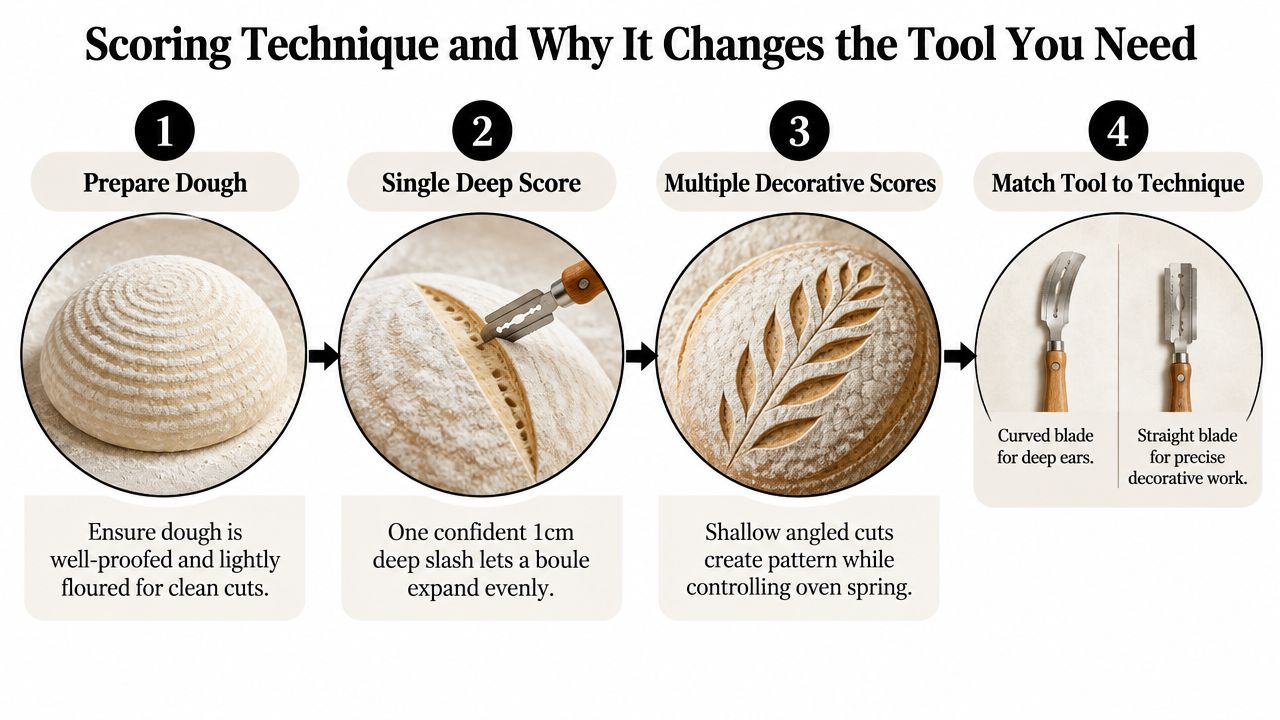
Scoring isn't decoration added after the work. It's the final structural decision you make before the dough meets heat. The cut must be quick enough not to deflate the loaf and deliberate enough to create a weak line in the crust.
Start with the dough supported on parchment or a lightly floured surface. Hold the lame like a pencil, keep your wrist relaxed, and make one committed stroke rather than repeatedly tracing the same line.
Angle and depth
For a boule, one principal score can direct the main expansion. A bâtard often benefits from a longer cut following the loaf's length, with the blade angled so the upper skin can lift into an ear. Decorative marks should generally be lighter, because their job is to pattern the surface without competing with the main expansion route.
UK guidance for artisan bakers recommends a scoring depth of 3 to 6 mm and an angle between 22° and 45° for different results, as explained by Challenger Breadware's scoring technique guide. The practical lesson is more useful than the figures alone: angle control matters more than the brand name printed on the handle.
A gentle, shallow angle opens the surface broadly. A more upright angle makes a narrower incision. If you want a pronounced ear, the blade must travel with enough sideways action to create a flap rather than cutting straight down.
Match the blade to the dough
High-hydration dough needs a blade that glides without dragging. A replaceable razor mounted in a controlled curve helps you keep the edge moving across a sticky surface. Softer enriched doughs, including brioche-style mixtures, need a lighter touch because excess pressure can compress the dough instead of opening it.
Blade exposure also changes your confidence. Too much exposed edge invites over-cutting and makes the tool feel twitchy. Too little can force you to press, which is exactly what causes tearing. A stable handle lets you choose the cut first and use the blade geometry to support it.
A clean score comes from speed, angle and support. Sharpness is only one part of the result.
Watch the demonstration below for a visual reminder of how the blade travels through the dough.
Matching the Right Lame to How You Actually Bake
The best bread lame for a weekly sourdough baker isn't necessarily the right tool for someone who bakes a shaped loaf once every few months. Your normal dough, scoring pattern and tolerance for blade handling should decide the purchase.
A regular weekend baker needs forgiveness. Choose a curved replaceable-blade lame with a grip that won't twist during the main slash. It gives you a repeatable setup for a bâtard ear, and a fresh blade is available when the old one starts dragging.
Someone who makes boules occasionally may prefer a basic fixed wooden lame. It's simple, tactile and capable of a clean score when the blade is fresh. The limitation is replacement. If the edge is permanently attached, the tool has a shorter practical life.
Decorative scorers should choose control over drama. A straight razor arrangement gives a fine edge for wheat ears, leaves and geometric cuts, while a pronounced gooseneck can feel cumbersome for small detail work. The baker filming every loaf may appreciate a polished handle, but the scoring result still depends on movement and dough tension.
| Baking Scenario | Recommended Lame | Why It Fits |
|---|---|---|
| Weekly sourdough bâtards | Curved replaceable-blade lame | Forgiving angle and easy blade changes suit regular use |
| Occasional round boules | Basic fixed wooden lame | Low commitment and enough control for a principal score |
| Decorative scoring | Straight replaceable razor lame | Direct blade contact helps with fine surface patterns |
| Focaccia or pan loaves | Budget replaceable-blade model | Usually enough for a simple surface cut |
| Enriched doughs | Short-exposure fixed or replaceable model | Encourages lighter pressure on softer dough |
Sourdough now reaches beyond the classic round loaf. Puratos UK's bakery-trend coverage describes interest spanning softer and sweet applications as well as familiar bread formats. That makes versatility more valuable than buying a lame designed for one dramatic ear.
If your broader setup still needs a covered baking vessel, use this guide to Dutch ovens for bread baking to assess that purchase separately. The lame only controls the opening. It can't compensate for dough that spreads or an oven environment that sets the crust too early.
Do You Even Need a Dedicated Lame
No, not every baker needs one. A thin, sharp kitchen knife can make a workable score, and sharp scissors can handle certain snips or small cuts. An improvised razor attached to a handle may also cut dough, but I don't recommend building a permanent kitchen tool around exposed metal and tape.
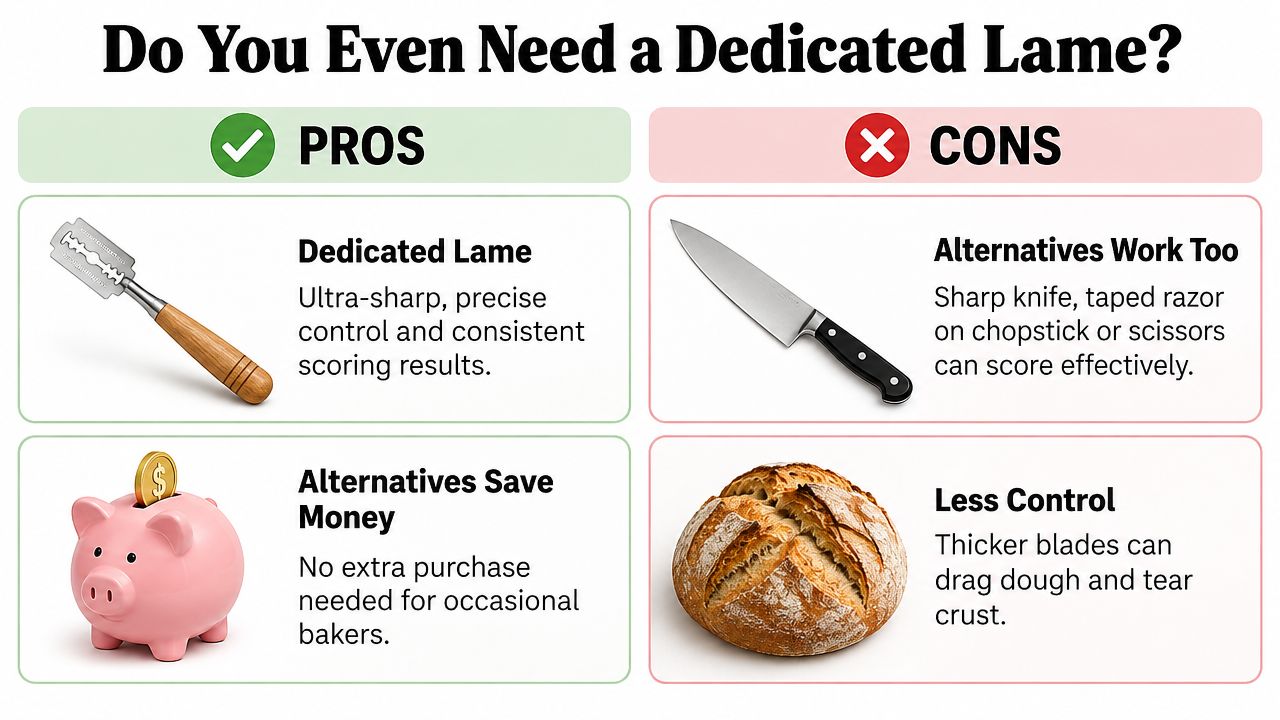
The question is frequency and confidence, not whether a dedicated gadget is morally justified. If you bake an occasional loaf and already own a narrow, sharp knife, try that first. Keep the movement shallow and decisive, and accept that the result may look more rustic than a bakery score.
When the dedicated tool earns its drawer space
A lame becomes worthwhile when you want predictable scoring, when a kitchen knife catches on wet dough, or when you prefer replacing a cheap blade instead of sharpening a knife after working through dough. The narrow edge also makes it easier to separate the action of scoring from the action of chopping.
Safety is the deciding factor for many home bakers. A purpose-built handle gives you something to hold, a known blade position and a storage routine. An improvised razor has none of those advantages unless you've made it exceptionally secure, and loose blades are a poor fit for a busy kitchen.
If you bake rarely, borrow or improvise carefully. If you bake regularly, buy the tool that makes you press less.
Don't buy a dedicated lame because sourdough equipment looks appealing online. Buy one if your current method drags, tears, or makes you hesitate at the moment. For a compact setup, a bread pan with lid may solve a more important baking problem than upgrading from one adequate scoring tool to another.
Safe Handling, Blade Changes and Storage
A lame is small, but the blade is not forgiving. Hold it like a pencil, with your fingers behind the blade, and keep the other hand away from the blade's arc. Score on a stable worktop, couche or tray, never on your palm or while carrying the loaf across the kitchen.
Replaceable blades need a deliberate routine. Clear the worktop first, put the handle down in a stable position, and change the blade over a surface where it can't bounce into a drawer or disappear under a tea towel. Follow the manufacturer's fitting method rather than forcing a blade into a mount that doesn't align.
A simple blade-care checklist
- Keep the blade dry: Moisture and dough residue make the edge unpleasant to handle and can affect the mount.
- Use a proper sleeve or case: Put the lame back in its supplied cover, or store it in a dedicated blade case.
- Dispose of used blades securely: Wrap the edge in cardboard and tape it closed, or place it in a suitable sharps container. Never leave a loose razor in the general bin.
- Store it predictably: A magnetic strip can work if the blade is protected and out of reach, but a closed case is safer in a family kitchen.
- Retire it early: If the blade drags, catches or tears instead of gliding, replace it.
A tired blade can be more dangerous than a fresh one because you instinctively add pressure. That extra force reduces control and makes the cut less predictable. Replacement blades are not an optional accessory for a reusable lame. They're part of the tool's running cost.
Keep spare blades away from children and label the storage spot so nobody mistakes the case for an ordinary utensil. Good handling should become automatic before the dough reaches the oven.
Which Lame Should You Buy for Your Kitchen
My overall recommendation is straightforward. Most UK home bakers should buy a curved, replaceable-blade lame with a secure handle and budget for fresh razors. It offers the best balance of control, longevity and confidence without making the purchase about luxury materials.
Best lame by UK home-baker type
| Baker Type | Recommended Lame | Handle Style | Approx. Price (GBP) | Why It Wins |
|---|---|---|---|---|
| Weekly sourdough maker | Curved replaceable-blade lame | Gooseneck or shaped reusable handle | Check current UK listing | Makes the main ear cut repeatable and accepts fresh blades |
| Occasional batard baker | Basic fixed wooden lame | Straight tactile handle | From about £3.59 in UK specialist listings | Low upfront commitment for infrequent scoring |
| Decorative scorer | Straight replaceable razor lame | Slim reusable handle | Check current UK listing | Gives direct control for fine surface patterns |
| Cautious beginner | Short-exposure replaceable model | Rounded ergonomic grip | Check current UK listing | Reduces hesitation while keeping blade changes practical |
Buy the curved replaceable model if you bake bâtards, want a reliable ear and don't want to replace the entire tool when the edge dulls. Skip it if you only score a loaf occasionally and your existing thin knife already gives clean results.
Buy the fixed wooden lame if you want the simplest inexpensive entry point for occasional boules. Skip it if you dislike exposed blades, need adjustable geometry or expect to bake often.
Buy the straight replaceable model if decorative scoring is your main interest. Skip it if your priority is a deep, dramatic bâtard ear and you don't yet feel comfortable controlling blade angle.
UK home baking is becoming more utility-driven rather than purely aspirational. AHDB's baking-trend coverage reports that home baking declined 7% year-on-year in 2025, while savoury baking rose from 1.4 to 1.5 weekly occasions per household. For an inconsistent baker, that supports a low-friction purchase: a safe handle, accessible blades and no unnecessary flourish.
The verdict is simple: choose the replaceable-blade lame that feels stable in your hand, unless you bake too infrequently to justify it. Blade replacements are the ongoing cost worth planning for, because a sharp edge builds scoring confidence and reduces the pressure that causes tearing.
If you're building a practical sourdough setup, visit The Sourdough Cult to browse live starter, beginner kits and straightforward feeding guidance alongside the tools you'll use at the worktop. Choose the smallest setup that matches your baking routine, then practise one clean score before adding more equipment.


