

What if the very flour you bought to nourish your new starter is actually the reason it refuses to rise? It is a quiet, stinging frustration. You have spent your hard-earned pounds on premium organic bags and hours obsessing over protein percentages, yet the bubbles never come. We have all been there. We have stared at a lifeless jar of grey paste while the dream of a crusty artisan loaf feels further away than ever. It's time to stop guessing and start understanding the biology of your jar.
You deserve a culture that breathes with life. This guide reveals exactly what flour for sourdough starter uk bakers should reach for to fuel a vigorous, rhythmic fermentation. We will decode the 2026 folic acid fortification laws that affect your local shop shelves. We will strip away the confusion of protein levels. We will move past the common supermarket pitfalls that stall your progress and waste your ingredients. You are about to master the foundation of the craft, turning a simple feeding into a reliable ritual of strength and confidence.
Key Takeaways
- Understand why "Strong" bread flour provides the essential protein backbone for your culture. It is the structural foundation of every successful bake.
- Learn precisely what flour for sourdough starter uk conditions demands, whether you choose predictable white varieties or the high-activity energy of wholemeal.
- Reject industrial roller-milled options that stall fermentation. Seek out stoneground grains to preserve the vital, living enzymes your starter craves.
- Simplify the feeding ritual with the 1:1:1 ratio. Precision, patience, and tepid water are the only tools you need for a bubbling result.
- Realise why an active heirloom culture is a legacy worth starting. Move beyond the gamble of a dry start and embrace a living tradition that works from day one.
The Foundation: Why Flour Choice Dictates Starter Success
Sourdough is an ancient pact between the baker and the grain. It isn't a recipe; it's a relationship. To understand this, you must first define the medium. A sourdough starter is a symbiotic culture of wild yeast and lactic acid bacteria. This living entity relies entirely on you for its survival. You are the gatekeeper. You provide the starch and the minerals that these microscopic workers consume to create carbon dioxide and complex acids. When you are choosing What is Sourdough? and how to begin, you'll realise that your choice of fuel is everything. In the United Kingdom, the terminology can be a maze for the uninitiated. When you are deciding what flour for sourdough starter uk bakers trust, you'll see the term "Strong." This simply refers to a high protein content. It is the essential scaffolding your starter needs to trap gas and build a resilient structure.
Protect this culture from the silent killers of fermentation. Chlorinated tap water and bleached flours are the primary enemies of your jar. While the UK has strict regulations on flour bleaching, many budget-friendly options are processed in ways that strip away the very life you're trying to cultivate. High-intensity milling generates heat. Heat kills enzymes. Without these enzymes, your starter is essentially trying to run a marathon on empty lungs. Observe. Feed. Wait. The ritual requires honesty from your ingredients. If the foundation is weak, the entire structure will eventually fail.
The Biology of the Grain
The life of the wheat resides on its skin. Microorganisms live on the outer bran of the wheat berry, waiting for moisture to wake them up. White flour is stripped of this bran during the refining process. It becomes a cleaner fuel, but it's often a slower one. If you want a faster, more aggressive start, you look to wholemeal or rye. These varieties contain the full biological payload. They offer a diverse range of nutrients that kickstart the fermentation ritual with more vigour than their white counterparts. They represent the raw, unrefined energy of the field.
Why Supermarket Plain Flour Often Fails
Cheap supermarket plain flour is designed for biscuits and pastry, not for the rigours of wild fermentation. Its lower protein levels, usually sitting between 9 and 10 per cent, simply cannot support the weight of the gas produced during the rise. Your starter might bubble, but it won't hold. It collapses. It looks flat. This lack of enzymatic activity, combined with hidden additives in some low-grade flours, can inhibit the growth of your delicate wild cultures. You end up with a jar of grey paste instead of a thriving, active legacy. Avoid the bargain bin if you want your starter to sing.
Decoding UK Flour Types for Your Living Culture
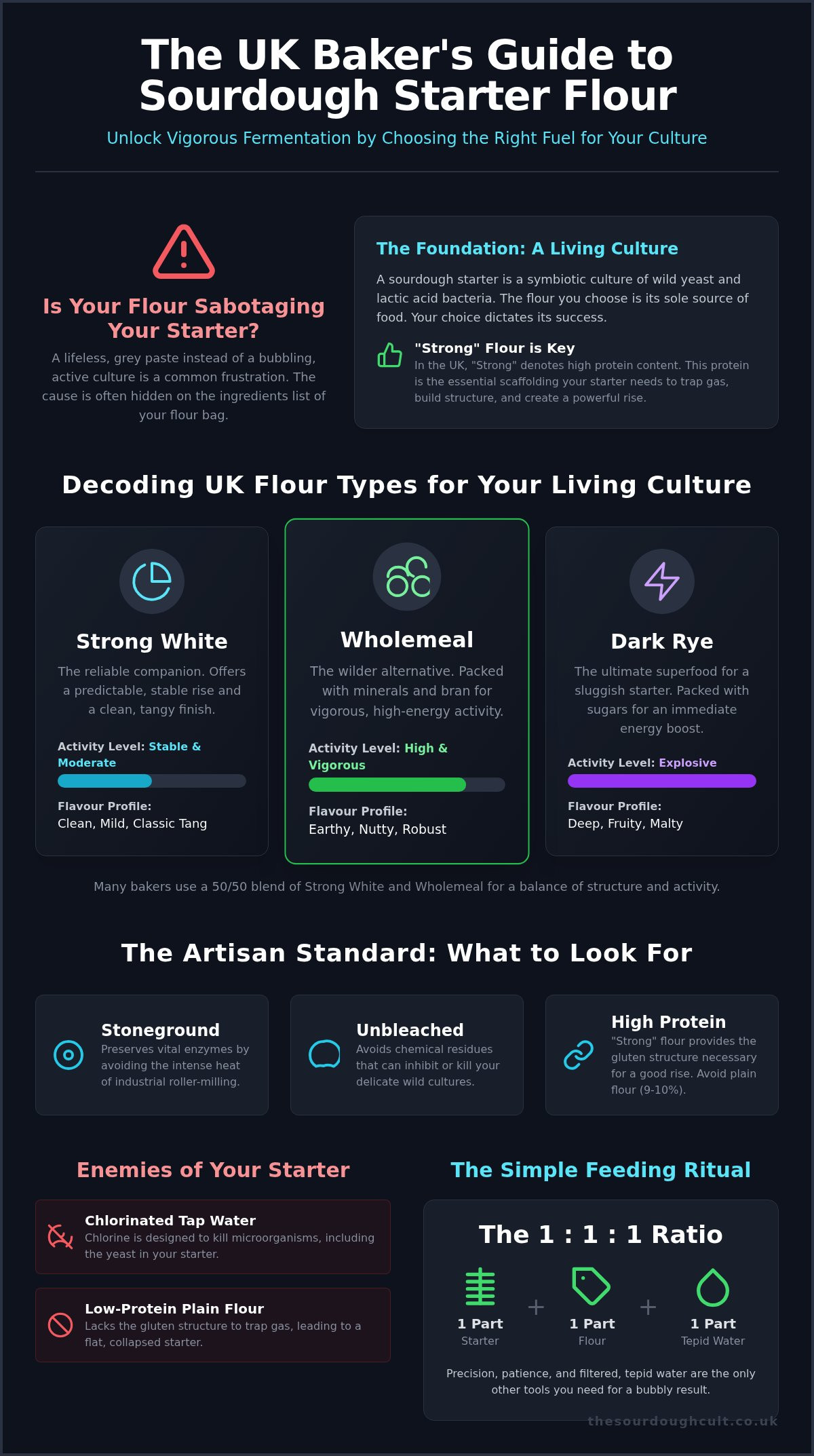
Choosing your grain is the first act of intent in the sourdough ritual. In the United Kingdom, we lack the "all-purpose" middle ground found in other markets. We have clear divisions. When you are questioning what flour for sourdough starter uk bakers should prioritise, you are really choosing the temperament of your fermentation. UK Strong White Bread Flour is the reliable companion. It offers a predictable, stable rise and a clean, tangy finish that doesn't overwhelm the palate. It is the gold standard for those seeking a starter that is easy to read and even easier to maintain.
Wholemeal flour is the wilder alternative. It is dense with the minerals and bran we discussed earlier. This makes it "thirsty." It absorbs significantly more water than white varieties, creating a stiff, active paste that bubbles with aggressive energy. Then there is Dark Rye. Rye is the ultimate superfood for a sluggish jar. It is packed with free sugars that provide an immediate, explosive energy boost to the sourdough starter microbiomes. If your culture feels dormant, rye is the spark that brings it back to life.
| Flour Type | Activity Level | Flavour Profile |
|---|---|---|
| Strong White | Stable & Moderate | Clean, Mild, Classic Tang |
| Wholemeal | High & Vigorous | Earthy, Nutty, Robust |
| Dark Rye | Explosive | Deep, Fruity, Malty |
Strong White vs Wholemeal: The Great Debate
Strong white provides the structural lift your final loaf requires. It is about the destination. Wholemeal, however, is about the journey. It accelerates the initial seven day creation process by providing a diverse nutrient profile. Many pragmatic UK bakers settle on a 50/50 blend. This hybrid approach offers the best of both worlds: the raw power of whole grain and the structural reliability of strong white. It is a balanced offering for a balanced culture.
The Rye Flour Supercharge
Rye is different. It creates a thick, glue-like consistency that traps gas more effectively than wheat alone. It's the secret weapon for a "rescue" feed. If your jar has been neglected in the fridge, a single feeding of organic rye can often restore its vigour overnight. If the science of grain selection feels overwhelming, starting with a Peace of Mind Kit allows you to focus on the ritual rather than the chemistry. It ensures your journey begins with a culture that is already thriving, regardless of the flour you choose next.
The Artisan Standard: Organic, Stoneground, and Unbleached
Quality is not a luxury. It is a prerequisite. When you are deciding what flour for sourdough starter uk artisans recommend, you must look beyond the brand name and into the heart of the mill. Most supermarket flours are the product of high-speed roller milling. This industrial process generates significant heat. Heat is the enemy. It damages the delicate enzymes and natural yeasts that your culture needs to thrive. In contrast, traditional stoneground milling keeps the grain cool. It preserves the integrity of the wheat berry. It keeps the biology intact. By choosing stoneground, you are providing your starter with a living, breathing foundation rather than a sterile powder.
The landscape of UK flour changed significantly in 2026. With mandatory folic acid fortification now a legal requirement for most non-wholemeal wheat flours, the "purity" of your white starter is under a new lens. For the purist, this makes the choice of miller even more critical. Small-scale mills producing less than 500 metric tonnes per year remain exempt from these fortification rules. If you seek a completely unadulterated start, these artisan producers are your allies. They offer the transparency and honesty that industrial giants cannot match.
Why Organic Matters in the UK
Organic is more than a label. It is a shield for your microbes. Non-organic grains often carry residues of synthetic pesticides and fungicides. These chemicals are designed to kill. In the confined ecosystem of your starter jar, even trace amounts can stunt bacterial growth or lead to an imbalanced culture. Organic flour typically hosts a more diverse and robust microbial profile. It is an investment. It ensures the longevity of your heirloom culture. It respects the slow, natural process of fermentation without chemical interference.
Stoneground vs Roller-Milled
Texture dictates activity. Stoneground flour has a coarser, more irregular grain. This provides a physical "grip" for the yeast to cling to as it begins its work. Roller-milled flour is uniform. It is predictable. It is also biologically "quieter." If you want a starter that speaks with a loud, vigorous voice, look for "Traditional Stoneground" on the label. This ensures the flour contains the germ and the bran in their most natural state. It turns a simple feeding into a potent offering that fuels a truly artisan rise.
Never touch bleached flour. Chemical bleaching agents are a cult-killer. They destroy the very wild yeast you are trying to invite into your home. Fortunately, the UK market is predominantly unbleached, but always check the fine print. Your starter deserves honesty. Give it the best, and it will reward you with a lifetime of bread.
The Feeding Ritual: Ratios and Consistency
Feeding is not a chore. It is a ritual of maintenance. To ensure your culture thrives, you must move beyond the guesswork of cups and spoons. Accuracy is the silent language of the baker. When you are deciding what flour for sourdough starter uk climates require, remember that the method matters as much as the material. You are looking for a steady, predictable rhythm that builds strength over time. This is how you transform a simple mixture of grain and water into a powerful engine for your bread. It requires focus. It requires honesty. It requires the right tools.
- Step 1: Weigh everything. Use digital scales. Zero them out. Every gram of starter, flour, and water must be accounted for to maintain consistency. Volume measurements are for amateurs; weight is for artisans.
- Step 2: Apply the 1:1:1 ratio. Mix equal parts of your existing starter, fresh flour, and tepid water. This ensures the yeast has enough new fuel to consume without being overwhelmed by the acidity of the old culture.
- Step 3: Incorporate air. Use a danish dough whisk uk bakers trust to whip oxygen into the paste. Air is the catalyst for life. It wakes up the microbes and ensures a thorough mix without the mess of a spoon.
- Step 4: Monitor the heat. UK kitchens are notoriously fickle, especially during the damp winter months. Use a precision thermometer to ensure your water is between 25°C and 28°C. A cold jar is a slow jar. If your kitchen drops below 18°C, your fermentation will likely stall.
Switching Flours Mid-Journey
Starters are resilient. They are also creatures of habit. If you decide to change your grain from a strong white to a dark rye, do not do it all at once. Transition slowly. Mix 25 per cent of the new flour into your usual feed for the first few days, gradually increasing the ratio. You might notice a 24-hour lag where the starter appears less active. This is normal. The bacteria are simply adjusting their metabolic pathways to process a new nutrient profile. Be patient. Watch for the bubbles to return as the culture adapts to its new diet.
The "Cult" Feeding Ratio
Your flour choice dictates the final flavour of your loaf. For a deep, vinegar-like sourness, increase the percentage of wholemeal or rye in your feed. If you prefer a milder, buttery sandwich loaf, stick to 100 per cent strong white bread flour. Always respect the water. Use filtered or boiled-and-cooled water to remove chlorine, which can stunt the growth of your wild yeast. If you want to take the guesswork out of these variables, The Initiation: Beginner Kit provides the exact tools and guidance to master this ritual from your very first feed. It is about confidence, not complexity.
The Short-Cut to Mastery: Why an Active Culture Beats a Dry Start
Starting a culture from scratch is a gamble. You mix your flour and water, you wait, and you hope that the wild yeasts in your specific kitchen are friendly. Many beginners spend weeks staring at a silent jar, wondering if they chose the wrong bag from the supermarket or if the temperature was just slightly off. It is a path paved with wasted organic flour and growing frustration. There is a more honest way. By inheriting an heirloom culture, you aren't just bypassing the two-week struggle; you are connecting to a lineage of successful bakes. You are choosing stability over uncertainty.
The Sourdough Cult provides live, active starters derived from a time-honoured family recipe that has been nurtured for years. Unlike dried alternatives that require a long wake-up period, these cultures are ready to bubble within hours of their first feed. When you pair this established strength with the knowledge of what flour for sourdough starter uk bakers should use, you remove the variables that cause failure. You are no longer guessing. You are participating in a proven ritual with a culture that has already seen a thousand successful rises. It is the difference between trying to spark a fire in the rain and being handed a glowing ember.
The Peace of Mind Kit
This is for the baker who values their time and their sanity. The Peace of Mind Kit includes our live active culture, essential tools, and a digital initiation guide that strips away the technical fluff. It removes the gnawing anxiety of "is it dead?" by placing a vigorous, bubbling entity directly into your hands. It's designed for those who want to focus on the tactile joy of the bake rather than the biological stress of the first seven days. You get to skip the doubt and go straight to the bubbles.
Joining The 1%
For those who seek total immersion, The All Inclusive Sourdough Kit represents the ultimate initiation into the craft. It includes a sourdough thermometer uk artisans rely on to master the unpredictable British climate. This kit isn't just a collection of tools; it's a shortcut to artisan status. By using a sourdough starter kit for beginners, you ensure that your first loaf isn't a lucky accident but the start of a lifelong mastery. You are joining a circle of bakers who understand that the right foundation makes the complex craft feel effortlessly simple. Start with strength, and the rest will follow.
Master the Ritual of the Rise
Baking is more than a set of instructions. It is a commitment to the slow, honest transformation of grain into life. You now understand that the strength of your bread is born in the jar. By choosing stoneground, organic flours, you protect the delicate enzymes that drive fermentation. You have mastered the rhythm of the 1:1:1 feeding ratio. You have embraced the precision required for our fickle UK climate. Now that you understand what flour for sourdough starter uk artisans rely on, the gamble of the supermarket shelf is over. Your foundation is set. Your path is clear.
Don't spend weeks waiting for a silent jar to wake up. Our Cheshire-derived heirloom recipe has fuelled over 1,000 successful initiations across the country. With UK-wide tracked shipping, we ensure your journey starts with a living, breathing culture that is ready to work. Begin your initiation with The Fresh Start(er) Kit and embrace the tactile joy of the craft. The first loaf is just the beginning. Trust the process. Trust the grain. Welcome to the circle.
Frequently Asked Questions
Can I use plain flour for my sourdough starter in the UK?
Plain flour is generally too weak to support a vigorous sourdough culture in the long term. While it might show initial activity, its low protein content, usually 9 or 10 per cent, cannot maintain the structural integrity needed to trap fermentation gases. You'll likely end up with a liquid, inactive mess that lacks the strength to rise. Stick to strong bread flour to ensure your starter has the scaffolding it needs to thrive.
Is organic flour really necessary for a healthy starter?
Organic flour is not a strict requirement, but it acts as a vital safeguard for your living microbes. Non-organic grains often carry trace residues of synthetic pesticides that can inhibit the delicate balance of wild yeast and bacteria in your jar. Choosing organic ensures a cleaner, more diverse biological payload. It is an investment in the long-term health and resilience of your heirloom culture, protecting it from chemical interference.
Why is my sourdough starter not bubbling after three days?
A lack of bubbles after three days is usually a sign of the quiet phase where different bacterial strains are competing for dominance. It doesn't mean your culture is dead. Keep feeding it at regular intervals and ensure it stays in a warm spot, ideally between 25°C and 28°C. In the damp UK climate, a cold kitchen is the most common cause of a stalled start. Patience is your most important ingredient here.
What is the best UK brand of flour for sourdough?
When deciding what flour for sourdough starter uk bakers should trust, Doves Farm Organic Strong White and Shipton Mill are exceptional choices. Look for labels that specify stoneground milling to ensure the grain's enzymes haven't been damaged by industrial heat. These brands provide the consistency and mineral density required for an artisan-level starter. Avoid budget supermarket own-brand flours, as they are often over-processed and biologically quiet.
Should I use warm or cold water when feeding my starter?
Always use tepid water, ideally between 25°C and 28°C, to wake up your yeast without shocking the culture. Cold water from a UK tap will significantly slow down fermentation, especially during the winter months. Conversely, water that is too hot will kill the very microorganisms you're trying to cultivate. Aim for a temperature that feels barely warm to the touch for the most consistent and rhythmic results.
Can I mix different types of flour together for one feed?
Mixing different flours is a brilliant way to customise the temperament and activity of your starter. A 50/50 blend of strong white and wholemeal offers the structural reliability of wheat with the enzymatic boost of the whole grain. You can experiment with different ratios to find a balance that suits your specific baking rhythm. Just remember to transition slowly if you're making a permanent change to your culture's primary diet.
How do I know if my flour has "died" or gone stale?
Flour doesn't die in a biological sense, but it does go stale and lose its nutritional vitality over time. You'll know your flour is past its best if it smells musty or metallic, particularly with wholemeal and rye varieties which contain natural oils. Stale flour provides a poor offering to your starter, resulting in sluggish activity and unpleasant off-flavours. Always store your grain in a cool, dark place to preserve its strength and integrity.
Does the protein percentage on the bag actually matter?
The protein percentage is critical because it determines the strength of the gluten scaffolding in your bread. For a healthy sourdough starter, you should aim for a protein content of at least 12 per cent. This high level allows the starter to expand and hold its shape as the yeast produces carbon dioxide. Without this structural support, your starter will appear runny and fail to provide the lift needed for a true artisan loaf.


