

You've mixed the dough, watched it spread across the tin, and pulled out another gluten-free loaf that looks respectable until you slice it. The crust is firm, the centre is crumbly, and the crumb has none of the stretch you expect from bread. You may have blamed the flour blend, the yeast, or your shaping technique, but the problem is often the relationship between psyllium husk powder and water.
Psyllium can give gluten-free dough the flexibility, gas retention, and sliceable structure that wheat-free flour lacks. It can also produce a gummy centre or a rubbery crumb when the dosage and hydration are slightly out of balance. The best results come from treating psyllium as a structural ingredient, not a fixed recipe extra.
Table of Contents
- Why Psyllium Husk Transforms Gluten-Free Bread
- Measuring Psyllium for Perfect Dough Structure
- Mastering Hydration and Pre-Hydration Techniques
- Understanding Texture Outcomes at Different Ratios
- Practical Recipe Substitutions and Examples
- Coeliac Safety and Choosing Certified Products
- Storing Baked Goods and Troubleshooting Tips
Why Psyllium Husk Transforms Gluten-Free Bread
The familiar gluten-free bread problem is structural. Wheat dough stretches because gluten proteins form a flexible network around the gas produced during fermentation. A blend based on rice, oat, buckwheat, or starches doesn't naturally create the same elastic framework, so the dough may spread, fracture, or collapse once it leaves the oven.
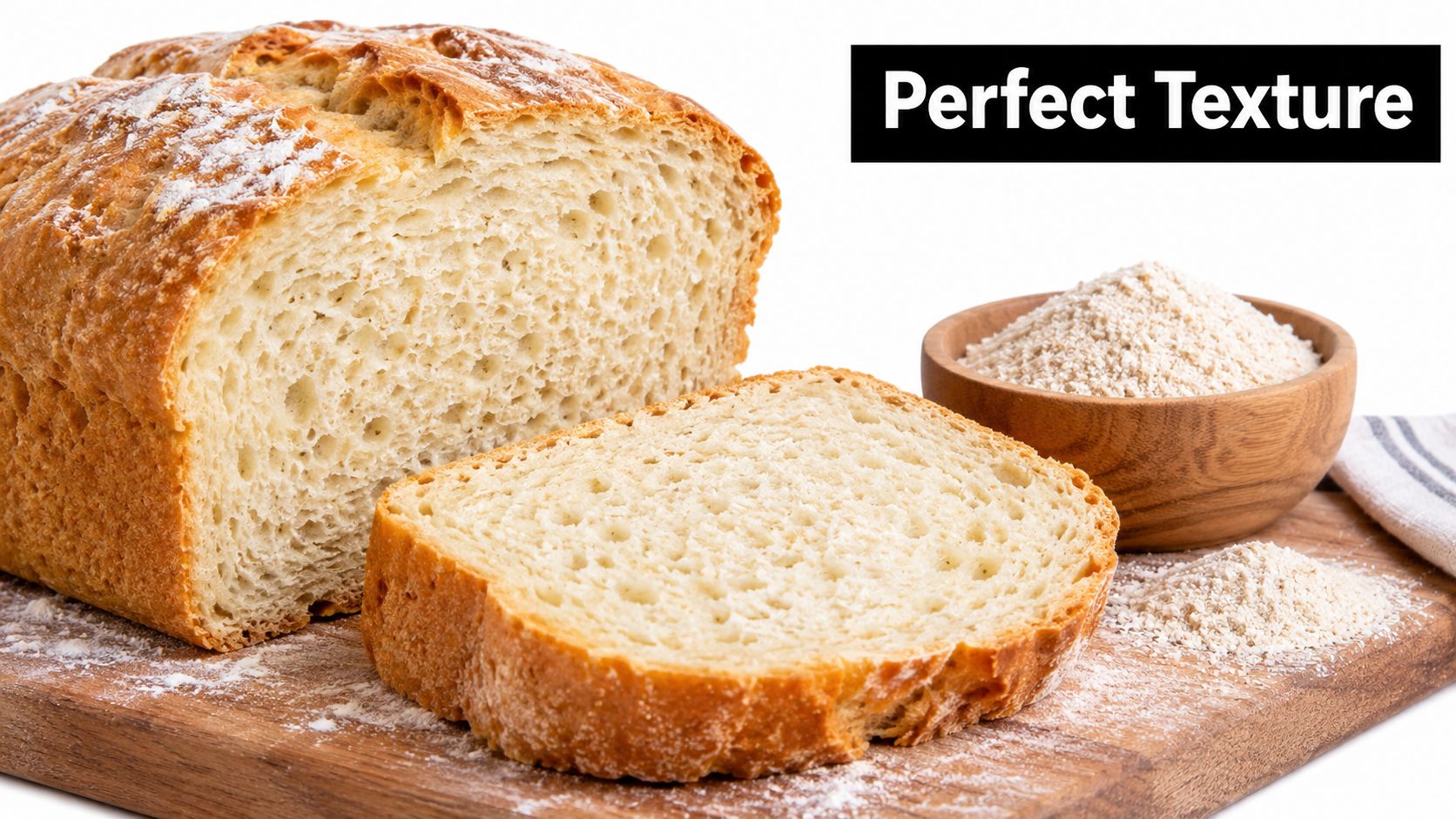
Psyllium husk powder works differently from a simple flour substitute. When it meets water, it swells and forms a viscous gel. Distributed through a dough, that gel helps bind particles together and gives the mixture enough elasticity to hold its shape. It won't recreate wheat gluten exactly, but it can provide the continuous, flexible structure that a gluten-free loaf needs.
Why the gel matters
A dough containing psyllium can stretch during proofing instead of just flowing outwards. That matters because fermentation creates gas, and the dough needs somewhere to hold it. If the gel network is too weak, bubbles escape and the loaf remains tight or flat. If the network is too strong for the amount of water available, the dough can become stiff and trap gas unevenly.
This is why psyllium deserves a permanent place in a gluten-free baker's pantry, but not because it can rescue every formula automatically. The powder needs to hydrate evenly, and its amount needs to suit the flour blend. A good flour sifter for more even gluten-free mixing can help distribute it through the dry ingredients, but sifting won't correct an unsuitable water level.
More than a texture aid
Psyllium is also a concentrated source of soluble fibre. A UK retail listing gives a 5 g serving as 4.5 g of fibre, including 3.7 g of soluble fibre, and identifies the product as gluten free (Holland & Barrett's psyllium product information). The British Heart Foundation says average UK adult fibre intake is around 17 g a day, compared with guidance of 30 g a day, so psyllium can add meaningful fibre in a small quantity.
That nutritional density is useful, but it also explains why small changes matter. Psyllium isn't a neutral powder that disappears into the flour. A little more can alter the dough's viscosity, moisture retention, and final bite. Treat it as a functional hydrocolloid, and you'll get much more reliable bread.
Measuring Psyllium for Perfect Dough Structure
A loaf can look underhydrated one minute and turn stiff the next. Psyllium absorbs water quickly, so a small change in its dose can alter viscosity, gas retention, and crumb structure. Start by weighing psyllium rather than relying on spoons. Powder fineness, brand, and density affect how much fits into a volume measure, so two spoonfuls may produce different doughs.
No universal psyllium percentage suits every gluten-free loaf. Flour composition, water absorption, mixing method, and the desired crumb all affect the workable range. A structural review identifies a modelled optimum around 3.53% psyllium at 75% hydration, while warning that a higher psyllium dose needs proportionally more water to maintain volume and softness (the structural review summarised by Pure Gluten Free). Treat that figure as a development reference, not a fixed instruction. The right dose depends on the flour blend and the product in your hand.
A reliable measuring routine
- Weigh the complete flour blend first. Include rice flour, oat flour, buckwheat flour, starches, and powdered seeds that belong to the dry base.
- Record the psyllium weight separately. Do not add an extra pinch because the dough appears loose before hydration is complete. Evaluate its consistency after the psyllium has had time to bind water.
- Keep the brand consistent while testing. A finely powdered product and a coarser husk can behave differently. Changing products means testing the water balance again.
- Change one variable at a time. If the loaf is dense, avoid increasing psyllium, adding water, changing the flour blend, and extending the proof together. Isolate the adjustment so you can identify its effect.
- Write down the result. Note the psyllium weight, total liquid, dough consistency, proofing behaviour, and crumb after cooling. That record turns a disappointing loaf into useful formulation data.
For coeliac baking, check that the psyllium and every flour in the blend are labelled gluten free. Keep the product separate from ingredients that may contain gluten, and consider shared utensils, storage containers, and work surfaces before weighing. A correctly measured dose cannot compensate for cross-contact.
Too much psyllium can produce a firm, rubbery, or gummy crumb. Too little may leave the dough unable to retain gas. Practical rule: weigh the powder, keep the hydration process consistent, and adjust water in small increments before changing the psyllium dose.
Mastering Hydration and Pre-Hydration Techniques
Most psyllium failures are hydration failures. The powder may be present in the right amount, yet dry pockets, rushed mixing, or uneven water distribution can leave parts of the dough weak and other parts excessively gelled.
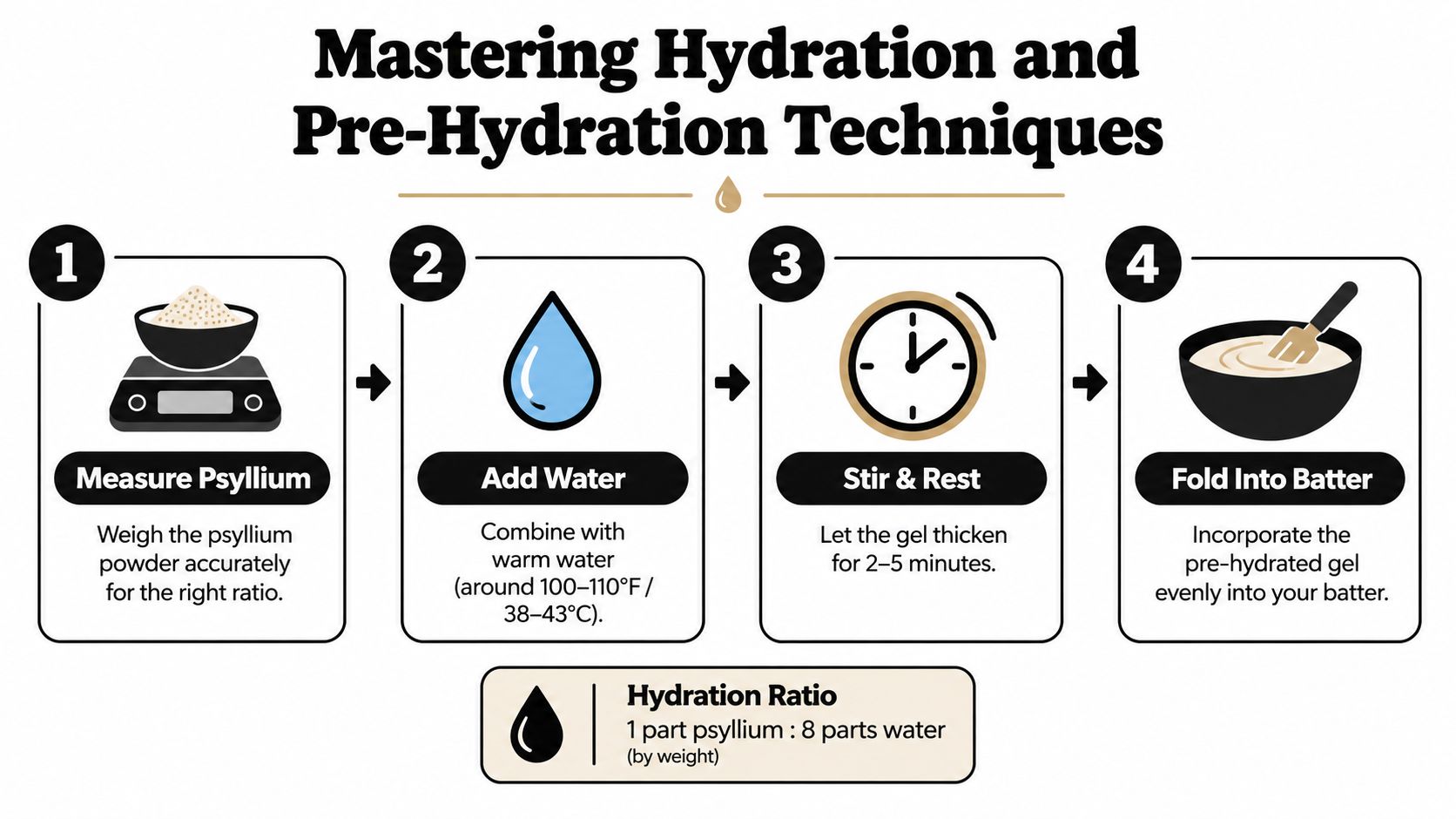
Pre-hydration gives you control. Mix the weighed psyllium with a measured portion of the recipe's water, stir thoroughly, and leave it until the liquid has become a smooth, slippery gel. The supplied infographic describes a short rest of 2 to 5 minutes, while other dough development methods may require a longer pause depending on the product and temperature. The important point is consistency. Use the same rest time during your comparisons.
Build the gel before building the dough
A practical sequence looks like this:
- Measure the water and psyllium separately. Use scales for both where possible.
- Whisk the psyllium into the water. Keep stirring until no dry islands remain around the bowl.
- Wait for a uniform gel. It should look cohesive rather than watery with floating clumps.
- Add the gel to the dry blend. Mix until the flour is evenly moistened and no dry pockets remain.
- Assess the dough before adding more water. Gluten-free dough often thickens as the flour and psyllium continue absorbing liquid.
The research on gluten-free bread systems shows that psyllium, methylcellulose, and hydration need to be optimised together. An unsuitable balance can produce weak crumb and excessive expansion when water is too high, or a rigid dough with trapped gas and poor cell expansion when water is too low relative to the hydrocolloid (the UK-relevant technical study on psyllium and hydration).
Judge consistency, not the clock
A wet dough should be cohesive and able to mound or hold a shaped edge, depending on the loaf style. It shouldn't pour like a thin batter unless you're deliberately making a batter bread. A thicker quick-bread mixture may remain spoonable, but it should still show even gel distribution rather than streaks of clear or slimy psyllium.
Add remaining water gradually. If the dough is tight and tears when moved, add a small amount, mix fully, and wait for the new texture to develop. If it slumps, don't immediately add more psyllium. Give the flour time to hydrate, then decide whether the structure is too weak.
A stretchable bowl cover for resting dough helps prevent the surface from drying while the mixture settles. The aim isn't to follow a fixed hydration number blindly. It's to reach the target structure with the fewest changes possible.
Understanding Texture Outcomes at Different Ratios
Psyllium changes both dough behaviour and the way bread feels when eaten. At a modest dose, the crumb can stay light and delicate. Increase the dose, however, without providing enough water, and the same loaf may become dense, rubbery, or difficult to expand. Small changes matter because psyllium binds water quickly, leaving less moisture available for flour particles and gas expansion.
The modelled result around 3.53% psyllium and 75% hydration provides a useful reference, not a universal formula (the gluten-free bread review). The review also reports that controlled psyllium substitution at 4% and 8% in wheat bread increased crumb moisture and volume, while producing darker crust colour and requiring sensory checks. The practical takeaway is that dosage affects structure, moisture, appearance, and chew together.
| Psyllium percentage | Dough consistency | Baked crumb texture | Best for |
|---|---|---|---|
| Lower end of the working range | Softer and less elastic, with a greater tendency to spread | Lighter, more delicate, and less chewy | Soft rolls, tender buns, and less structured bakes |
| Around the modelled optimum | Cohesive and flexible when hydration is balanced | More resilient crumb with useful chew and gas retention | Shaped loaves and bread where sliceability matters |
| Higher end without matching water | Thick, resistant, or difficult to expand | Dense, gummy, or rubbery rather than pleasantly chewy | Formulas deliberately developed for extra fibre |
Read the dough before you bake
A balanced dough should feel evenly hydrated. Stickiness is acceptable, but dry flour pockets, stiff pellets, or clear streaks of gel indicate poor distribution. Lift or fold the mixture and watch its response. It should resist slightly, then relax. Immediate cracking suggests insufficient water or uneven hydration, while a flat slump points to weak structure.
Adjust in small increments. A little extra water can soften a tight dough, but adding more psyllium to a weak mixture may create a heavier crumb instead of solving the problem. Allow the dough to settle after each change, then judge its consistency again.
Tin choice also changes the outcome. A supportive Pullman loaf tin can help a softer dough rise upward, whereas a free-form loaf needs more internal strength. One psyllium level may therefore work in a tin and spread on a tray.
Cool the loaf fully before judging it. Psyllium holds moisture, and the crumb continues setting after baking. Record whether the interior is moist, gummy, dry, springy, or crumbly. Those observations provide a better basis for the next hydration adjustment than just deciding that the bake failed.
Practical Recipe Substitutions and Examples
Psyllium isn't a direct one-for-one replacement for wheat gluten, xanthan gum, or extra flour. A wheat recipe relies on gluten development, while a gluten-free formula needs a different balance of binder, water, mixing, and proofing. Start by identifying the role of the original ingredient, then rebuild the structure rather than just adding psyllium to the existing list.
Three useful formula adaptations
A basic white loaf should use a balanced gluten-free flour blend, psyllium measured by weight, and enough liquid to produce a cohesive dough. Pre-hydrate the psyllium, mix it into the dry blend, and allow the dough to settle before shaping. If it spreads during proofing, reduce free water slightly in the next bake or use a tin that offers more support. If it cracks and feels rigid, increase the liquid modestly rather than adding more binder.
A seeded multigrain loaf needs extra attention because seeds compete for moisture. Keep the psyllium dose stable while testing, soak particularly absorbent seeds separately, and add them only after the dough has developed an even gel structure. The dough should remain flexible after the seeds are distributed. If the crumb becomes dry, the first adjustment should be available water, not an automatic increase in psyllium.
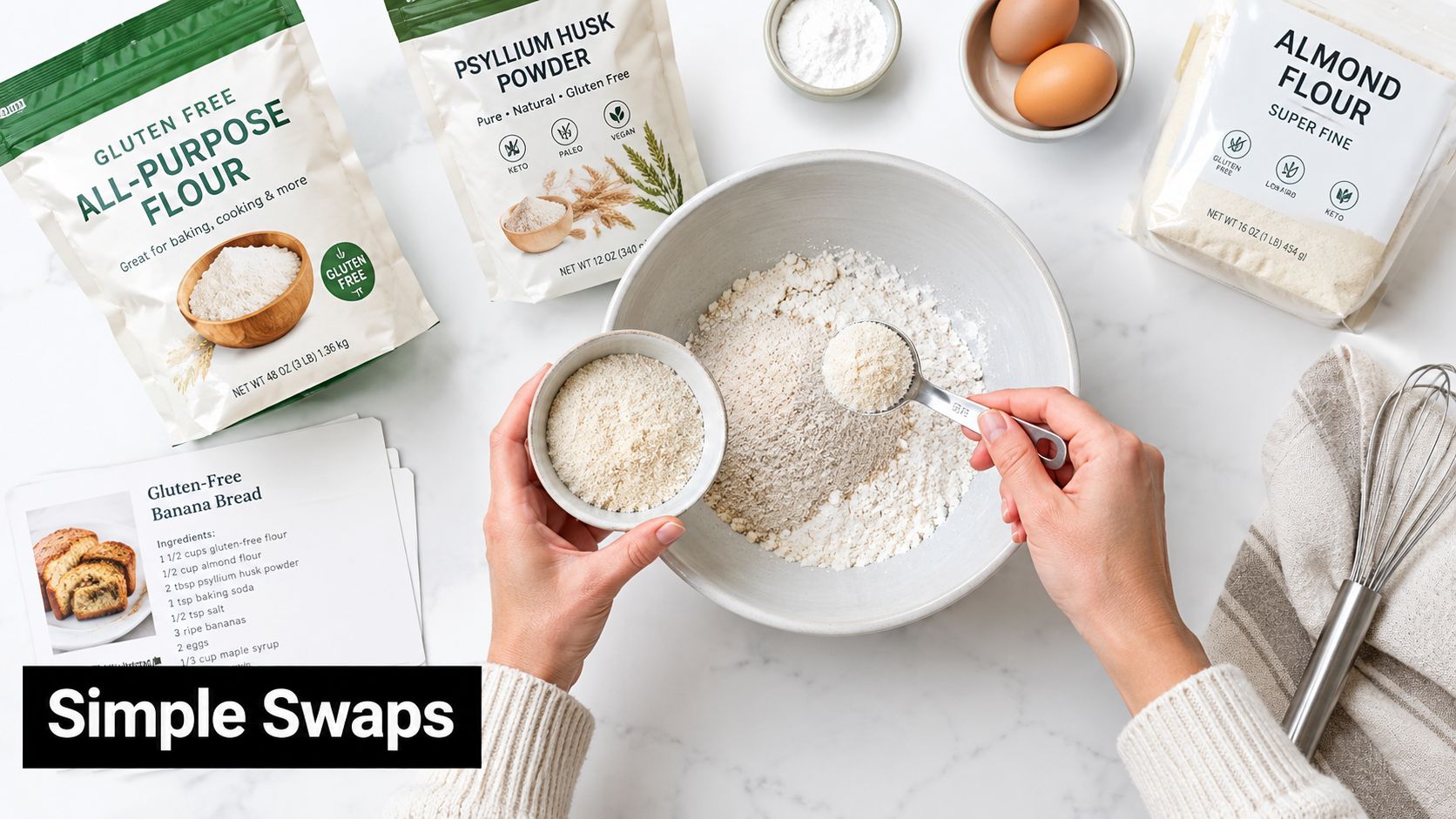
A banana bread adaptation behaves differently because fruit contributes moisture, sweetness, and weight. Use psyllium sparingly as a structural aid, mix it thoroughly with the dry ingredients or pre-hydrate it in part of the liquid, and avoid treating the batter like a yeast dough. It should be thick enough to hold suspended ingredients, but not so stiff that it needs pressing into the tin.
Match the method to the flour
Almond flour brings fat and a soft, tender character. Oat flour can make a moist, soft crumb, while rice-heavy blends may feel dry or slightly gritty until fully hydrated. Coconut flour is especially absorbent and can quickly turn a batter stiff, so it demands careful liquid management.
A recipe that works with one blend may not transfer cleanly to another. When substituting, preserve the psyllium weight for the first trial, then change the water gradually. Give the dough time to hydrate before deciding that it needs correction.
For yeast-raised bread, fermentation and proofing create the pressure that the gel must hold. For baking-powder batters, the structure has less time to develop and mixing must be efficient. In both cases, the best substitution is the one that respects the existing flour's absorption rather than copying a number from an unrelated recipe.
The following demonstration shows why a staged method matters in practice.
After mixing, wait for the batter or dough to settle before judging it. A mixture that looks loose immediately after stirring may become workable as psyllium and flour absorb water. Conversely, a dough that seems firm at first can become even tighter after resting.
Coeliac Safety and Choosing Certified Products
A product labelled gluten free may be suitable for a gluten-free recipe, but that label alone doesn't answer every question a coeliac baker needs to ask. The claim may describe the ingredient or finished product, while the wider supply chain, shared equipment, and batch controls remain unclear.
UK retail listings commonly describe psyllium husk powder as gluten free, vegan, and wheat free. A UK supplier also highlights allergen testing for gluten alongside sesame and mustard, showing why the product label and the supplier's control information should be considered together (UK psyllium product and allergen information).
Questions worth asking before buying
- What does the gluten-free claim cover? Check whether it applies to the ingredient itself, the finished packed product, or the manufacturing process.
- Is gluten batch tested? Look for clear information about testing rather than relying on a prominent front-of-pack claim.
- Does the facility handle wheat or other allergens? Shared production may affect the risk assessment for a household baking specifically for someone with coeliac disease.
- Are sesame and mustard controlled? These allergens are relevant to some supply chains and deserve attention alongside gluten.
- Is there documented segregation? Ask whether raw materials, equipment, and packing areas are separated or managed through validated cleaning controls.
The product's gluten-free status is only one part of safe baking. Flour, seeds, decorations, baking powder, work surfaces, mixers, cloths, and tins can all introduce contamination if they're shared with wheat-based baking. A carefully chosen psyllium product can't make an otherwise contaminated kitchen safe.
A gluten-free label answers one question. It doesn't automatically describe every contamination control used from sourcing to packing.
For bread made for a coeliac guest, choose suppliers that provide specific allergen information and retain the packaging until the bake has been eaten. If the supplier can't explain its controls, choose a product with clearer documentation.
Storing Baked Goods and Troubleshooting Tips
Cool psyllium-based bread fully before wrapping it. An airtight bag or container helps retain moisture for short-term storage, while freezing individual slices prevents repeated thawing and refreezing. Rewarm gently if the crumb firms up.
Use the loaf's symptoms to choose the next adjustment:
- Gummy centre: Bake longer and cool completely before slicing. If it persists, reduce free water slightly or review the psyllium balance.
- Flat loaf: Check that the gel was evenly hydrated and that the dough had enough structure for its tin or shape.
- Dense crumb: Consider whether the dough was too stiff, the water too low, or the hydrocolloid too high for the flour blend.
- Dry cracks: Increase hydration gradually and avoid adding extra flour during shaping.
- Uneven texture: Look for dry psyllium pockets or incomplete mixing before changing the formula.
UK bowel-health guidance also stresses that psyllium must be taken with plenty of fluid. Pharmacy guidance commonly gives dosing examples around 3.5 g twice daily, and recommends mixing the powder into a full glass of water and drinking it immediately (UCLH guidance on psyllium husk fibre). Baking applications use different quantities and methods, but the hydration principle remains important.
The Sourdough Cult supplies live, active sourdough starter from a long-maintained family culture in Cheshire, alongside practical starter kits, jars, tools, and clear feeding guidance. If you want to develop dependable fermentation habits for gluten-free or traditional bread projects, visit The Sourdough Cult and choose the starter or kit that fits your baking setup.


