

Your sourdough starter is a resilient survivor, not a fragile pet. It is an heirloom. It is a legacy. It is a living culture that has survived for generations, and it will easily survive your trip to the coast. We know the anxiety. You have spent months feeding it. You have perfected your crumb. The thought of losing all that progress feels like a genuine disaster. But with the right sourdough starter holiday care, you don't have to choose between a week of sun and the health of your bake.
Mastering these rituals is simpler than the elitists want you to believe. No complex schedules. No expensive equipment. Just a few basic steps to keep the spark alive whilst you are away. We promise you a foolproof plan for storage that guarantees your culture returns as strong as your tan. We will explore the fridge method, the freezer backup, and the simple revival ritual to wake your starter up. You might even decide to keep a Peace of Mind Kit as the ultimate insurance policy. It is time to travel without the guilt.
Key Takeaways
- Stop worrying about your culture dying whilst you are away. Wild yeast is a hardy survivor that simply slows down in the cold.
- Master the essential fridge ritual for foolproof sourdough starter holiday care. A clean jar and a satiated culture are all you need for a stress-free trip.
- Choose the right preservation method for your timeline. Learn when to use the fridge and when to consider the freezer for longer absences.
- Learn the "Wake-up Ritual" to revive your starter upon your return. Distinguish between harmless hooch and actual mould with total confidence.
- Discover why a living legacy deserves a backup. Use the Peace of Mind Kit as your ultimate insurance against the unexpected.
The Holiday Anxiety: Why Your Starter Won’t Die in a Week
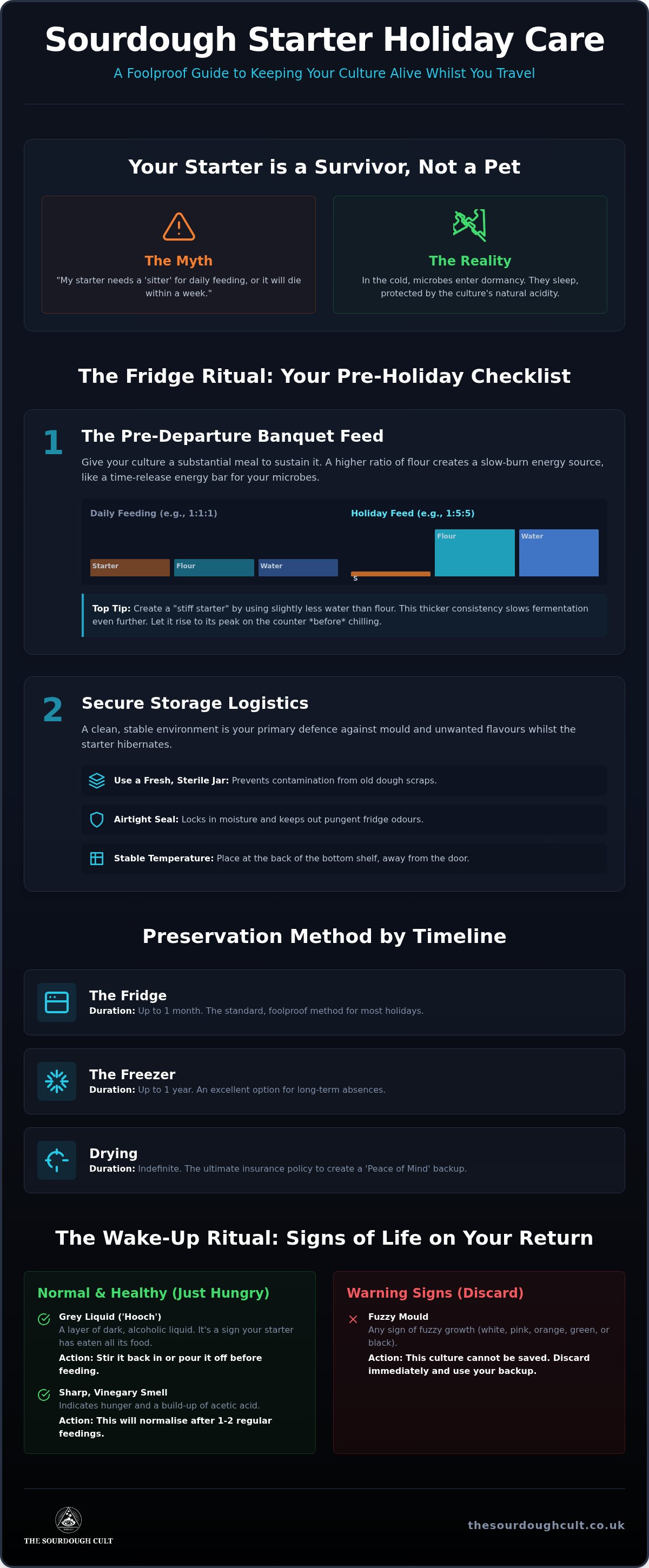
The fear is real. You look at your jar and see months of effort, a living legacy, and a rhythm you have finally mastered. Leaving it alone whilst you jet off for a break feels like abandonment. Many bakers believe the myth that they need a sourdough sitter to feed their culture every single day. They don't. Your starter is not a fragile pet that will wither without constant attention. It is a survivor. It is a robust community of microbes designed to endure. Effective sourdough starter holiday care is about working with biology, not fighting it. We call this the Holiday Care Ritual. It is a natural, essential part of the sourdough cult lifecycle that allows you to enjoy your holiday without the guilt of a "dead" jar.
The Biology of Dormancy
Wild yeast and lactic acid bacteria are tougher than the elite baking circles suggest. When you strip away the jargon and look at what is a sourdough starter, you find a simple, resilient ecosystem. In cold environments, these microbes don't die; they enter a state of dormancy. They sleep. They wait. Fermentation slows down to a crawl amongst the chilly shelves of your fridge, but the life remains. The natural acidity of a mature culture acts as a chemical shield. It protects the colony from opportunistic bad bacteria whilst the yeast is in its tactical pause. At The Sourdough Cult, our heirloom starters are bred for this exact resilience. They are hardy, ancient, and perfectly capable of waiting for your return.
Setting Your Expectations
You must differentiate between a three-day weekend and a three-week sabbatical. A short trip requires almost zero effort, but a longer absence needs a clear plan. Don't panic if you return to find a layer of grey liquid on top or a sharp, vinegary smell. This is not death. This is merely a sign that your starter has exhausted its food supply and is ready for a feed. Even a neglected jar is rarely truly gone unless you see fuzzy mould. Dormancy is a tactical pause in fermentation that preserves the culture's core without constant intervention. Whether you are away for a week or a month, the goal of sourdough starter holiday care is to keep the spark alive. If you are a frequent traveller, keeping a Peace of Mind Kit as a backup ensures you never have to start from scratch if the unexpected happens.
The Fridge Ritual: A Step-by-Step Guide to Cold Storage
The Fridge Ritual is not just about shoving a jar behind the milk and hoping for the best. It is a deliberate, final feast for your culture before it begins its long nap. Think of it as packing a heavy rucksack for a long trek. You want your microbes to be satiated, happy, and strong. Most generic advice tells you to feed your starter and chill it immediately. That is a mistake. Successful sourdough starter holiday care requires a strategy that balances fuel and timing. If you do it right, your starter won't just survive; it will be ready to bake the moment you return. It starts with a clean jar and ends with the perfect spot in your fridge.
The Pre-Departure Feed
Forget the timid 1:1:1 ratios you use for daily baking. Your culture needs a banquet to sustain it whilst you are away. We recommend a 1:2:2 or even a 1:5:5 feeding ratio. By giving the yeast a massive amount of fresh flour, you create a slow burn. The microbes take longer to eat through the new supply, which keeps them active for longer in the cold. To take this further, create a "stiff starter" by using a slightly higher ratio of flour to water. This thicker consistency acts like a time-release energy bar for your microbes. Once fed, let the jar sit on the counter until it reaches its peak rise. You want to see those bubbles at their most confident before you hit the pause button. This ensures the population is at its maximum strength before the temperature drops. If you are still mastering the basics of maintaining your starter, this ritual will quickly become second nature.
Storage Logistics
Cleanliness is your only real defence against mould. Before you leave, transfer your peaked starter into a fresh, sterile jar. Scraps of old dough on the rim are the primary breeding ground for unwanted guests whilst the jar sits undisturbed. Use an airtight seal to lock in moisture and keep out pungent fridge odours. Your starter is sensitive; it shouldn't taste like last night's takeaway. When choosing a spot, avoid the fridge door. The constant opening and closing causes temperature swings that can stress the culture. Place it at the very back of the bottom shelf where the temperature is most stable. This is the "No-Feed Zone" where the jar stays shut until your return. Using a professional sourdough starter kit uk ensures you have the right vessels for this level of care. If you want to ensure your setup is professional before you jet off, look into The Sourdough Cult gear to upgrade your ritual.
Long-Term Preservation: Fridge vs. Freezer vs. Drying
Not every trip is a quick dash to the coast. Some adventures take weeks. Others take months. Choosing the right method for sourdough starter holiday care depends entirely on your timeline. Whilst the fridge is the favourite choice for 90% of scenarios, it has its limits. If you are planning a proper sabbatical, you need a more robust ritual. You need to decide between the deep chill of the freezer or the ancient permanence of dehydration. Both methods work. Both are simple. But they require different levels of respect and different revival paths upon your return.
The Freezer Sabbatical
The freezer is your "Life Insurance" policy for absences longer than a month. It is a more aggressive form of dormancy. To start, feed a small portion of your culture and let it reach its peak. Once it is bubbling with life, place a few tablespoons into a small, airtight freezer bag. Squeeze out the air and lay it flat. This creates a thin sheet that freezes quickly. At sub-zero temperatures, the yeast behaviour changes. The water inside the cells can form ice crystals, which might damage a portion of the colony. Don't worry. The population is vast, and enough cells will survive to rebuild the empire. Just be aware that revival takes longer. A frozen culture needs two or three days of warm, frequent feeds to regain its full strength. It is a slow wake-up call, but it is better than starting from zero.
Dehydration for the True Devotee
Drying your starter into flakes is the ultimate way to organise a permanent backup of your heirloom culture. This is the ancient ritual of preservation. Simply take your active starter and smear it in a paper-thin layer across a sheet of parchment paper. Leave it in a dry spot until it becomes brittle and cracks. Once it is completely dry, crumble it into a "dormant dust" and store it in a glass jar. You can find detailed guides on how to dehydrate sourdough starter to ensure you get the texture right. This dried starter can last for years if kept in a cool, dark centre of your pantry. It is the most secure way to protect your living legacy against power cuts, fridge failures, or exceptionally long travels. It turns your liquid culture into a portable, resilient asset that waits patiently for water and flour to breathe again.
The Resurrection: How to Revive Your Starter After Your Return
You have returned. Your tan is fresh, but your jar looks like a science experiment. This is the moment of truth. Most beginners panic when they see a layer of dark liquid or a grey surface. They think they failed. They haven't. This is just the final stage of sourdough starter holiday care. Your culture is hungry, not dead. Unless you see fuzzy, colourful mould, your heirloom Cheshire culture is ready for its wake-up ritual. It survived the cold. Now, it just needs a little warmth and a lot of flour to find its rhythm again.
Dealing with the Hooch
Hooch is the dark, alcoholic byproduct of your yeast. It is a clear sign of life. It tells you the microbes have finished their feast and are waiting for more. You have a choice here. You can stir it back in for a sharper, more acidic tang in your future loaves. Alternatively, you can pour it off for a cleaner, milder flavour profile. Use this specific checklist to stay confident:
- Healthy: Grey or black liquid, a strong vinegary smell, and a slightly sunken surface.
- Dangerous: Fuzzy white patches, pink streaks, or orange spots.
If you see the dangerous signs, the culture has been compromised. If it is just hooch, proceed to the resurrection. The resilience of these microbes will surprise you.
The 48-Hour Recovery Plan
Don't expect a massive rise on the first feed. Your microbes are sluggish. They need a gentle nudge to break their dormancy. Patience is the only ingredient you can't buy. If your revival feels slow, don't give up. Most cultures are ready to bake within 48 to 72 hours of your return.
Day 1: Discard most of the old culture. Keep just a single tablespoon. Feed it a small 1:1:1 ratio of flour and water. This signals the end of dormancy without overwhelming the small population. Use a sourdough thermometer to ensure your water and environment are at a perfect 24 to 26°C. Warmth is the catalyst for life.
Day 2: Once you see a few bubbles, increase the ratio to 1:2:2. This builds strength and activity. By the end of the second day, your starter should be doubling in size again. If you want to ensure you always have a fresh start waiting for you, order a Peace of Mind Kit to keep as your ultimate backup. Your living legacy is too important to leave to chance.
Peace of Mind: Protecting Your Living Legacy
Your sourdough starter is more than a mixture of flour and water. It is a living legacy. It connects you to an ancient artisan craft that predates industrial shortcuts. This culture carries the history of your kitchen, the rhythm of your hands, and the character of your home. Protecting it is not just a chore. It is a ritual of respect. Whilst we have covered the essential steps for sourdough starter holiday care, the most experienced bakers know that life is unpredictable. A power cut, a fridge failure, or a helpful guest cleaning out the "old dough" can end a months-long journey in seconds. You need a strategy that goes beyond simple storage. You need a fail-safe.
The Ultimate Insurance Policy
Serious bakers don't leave their legacy to chance. They use a backup. We created The Peace of Mind Kit: Live Sourdough Starter for this exact reason. It is the essential insurance policy for those who travel often. Many companies sell dried powders that require days of coaxing to wake up. We don't. The Sourdough Cult provides live, active cultures from our heirloom Cheshire stock. These starters are hardy. They are resilient. They are ready to bake almost immediately. Having a fresh, live culture on standby removes the underlying stress of travel. If the worst happens to your main jar, you aren't starting from scratch. You are simply continuing the tradition. Joining the cult is about embracing these artisan rituals and ensuring your sourdough journey never hits a dead end.
Final Preparations
Success is found in the final 24 hours before you head to the airport. Do not rush the process. Feed your culture. Ensure the jar rim is spotless. Check the seal. Place it in the coldest, most stable part of your fridge. This small investment of time ensures a smooth return. When you finally walk back through your front door, your Danish dough whisk will be your best friend. Its unique design is perfect for the post-holiday feed, cutting through the thick, dormant culture and incorporating fresh flour without the struggle of a standard spoon. It is the tool of the trade for a reason. Don't let a well-deserved break stop your progress. Prepare well, travel light, and return to a kitchen that is ready for the next bake. Secure your Peace of Mind Kit before your next trip and bake with total confidence.
Master the Ritual and Travel with Confidence
You now have the blueprint. Your starter is a survivor. It doesn't need a sitter; it just needs a cold shelf and a bit of respect. By mastering the fridge ritual and the recovery plan, you can jet off without the weight of anxiety. This simple approach to sourdough starter holiday care ensures you return to a bubbling, active jar every time. Your culture is a living legacy. It carries decades of history from our heirloom Cheshire culture, and it deserves a fail-safe against the unexpected.
Don't let the fear of a dead culture hold you back from the artisan craft. We provide live, active starters delivered to your door and artisan tools designed for the modern home baker. Whether you are away for a weekend or a long sabbatical, these rituals keep the spark alive. It is time to stop worrying and start exploring. Join the Cult and secure your Peace of Mind Kit before your next adventure. The oven is waiting for your return.
Frequently Asked Questions
Can I leave my sourdough starter for 2 weeks whilst on holiday?
Yes, you can. A healthy, mature starter will easily survive two weeks in the fridge without any intervention. The key to successful sourdough starter holiday care is a large feeding before you go. Use a higher ratio of flour to water to create a stiff starter. This provides a slow-release fuel source. Your culture will simply enter a dormant state and wait patiently for your return.
What is the black liquid on top of my starter after being in the fridge?
That liquid is called hooch. It is a natural alcoholic byproduct created by the yeast when it runs out of food. It is not a sign of death; it is a sign of hunger. You can either stir it back in for a sharper tang or pour it off for a milder flavour. As long as there is no fuzzy mould, your culture is perfectly safe and ready to be fed.
Should I freeze my sourdough starter if I am away for a month?
Freezing is a great life insurance policy for trips lasting a month or longer. Whilst the fridge is usually sufficient, the freezer provides extra security for your living legacy. Feed your starter first, let it peak, and then freeze a small portion in an airtight bag. Be prepared for a slower revival process upon your return. It might take several days of warm feeds to reach full strength again.
How do I know if my sourdough starter died whilst I was away?
True death is rare, but fuzzy mould is the ultimate red flag. If you see white, pink, or orange fuzzy patches on the surface, your culture has been compromised. A grey surface or dark liquid is normal and safe. If the starter does not bubble or rise after three days of consistent feeding at 24 to 26°C, it may be time to start fresh with a Peace of Mind Kit from the cult.
Does a sourdough starter need to be fed whilst it is in the fridge?
No, it does not need active feeding whilst stored in the cold. The purpose of the fridge is to slow down the fermentation process to a crawl. This allows the microbes to survive on the pre-holiday feed you provided. Opening the jar to feed it whilst you are away would only introduce fluctuations in temperature and potential contaminants. Keep the lid sealed and the jar undisturbed until you return home.
How many times do I need to feed my starter after a holiday before baking?
Plan for at least two or three feeds before you attempt a loaf. The first feed wakes the yeast from its slumber. The second and third feeds build the strength and acidity balance required for a proper rise. You want to see the starter consistently doubling in size within four to six hours. Patience is essential here; your culture needs to find its rhythm again after its tactical pause in the cold.
Can I use my starter straight from the fridge when I get back?
You should not use it immediately for baking. A dormant starter is too sluggish to lift a heavy dough. If you try to bake straight away, you will likely end up with a flat, gummy loaf. Always perform at least one or two warm feeds to ensure the yeast population is active and vigorous. Your sourdough starter holiday care ritual isn't complete until the culture is bubbling and peaking with confidence.
What temperature is best for reviving a dormant starter?
The sweet spot for revival is between 24°C and 26°C. At this temperature, the yeast and bacteria are at their most active. Use a sourdough thermometer to check your water temperature and the internal temp of your jar. If your kitchen is chilly, find a warm spot like the top of the fridge or inside a microwave with the light on. Consistent warmth is the catalyst that ends dormancy and brings life back.


